



Discover Gemstream
Scroll gaming news


There’s something deeply unlikely about Meccha Chameleon‘s rise. A single Japanese dev, 2 months of work, no marketing budget, and somehow 5 million copies sold in under 2 weeks at $5.99 on Steam. The hide-and-seek concept clearly hits something universal. But the cracks start showing the moment you try to actually play with friends.
Meccha Chameleon comes from a single developer. lemorion_1224 wrote the entire game in 2 months as a Japanese indie creator. Steam was the launch platform, with no real marketing campaign behind it. TikTok, YouTube, and X picked up the slack immediately. Within days, streamers and content creators were piling clips of clever camouflage hides onto every feed. The viral wave hit hard, pushing sales past 5 million in just over a week.
The numbers didn’t escape industry attention. Taira Nakamura, a producer at Sega, weighed in publicly, calling the achievement « unthinkable for the industry and for game companies ». The success also kicked up a wave of conspiracy talk across social media. Some claimed lemorion_1224 had paid streamers, others pointed to « wealthy backers » working behind the scenes. None of it holds up. What lemorion_1224 actually did was nail a mechanic perfectly suited to short-form video. The clip-friendly satisfaction of a perfect camouflage hide is the engine driving every TikTok view and every Steam purchase.
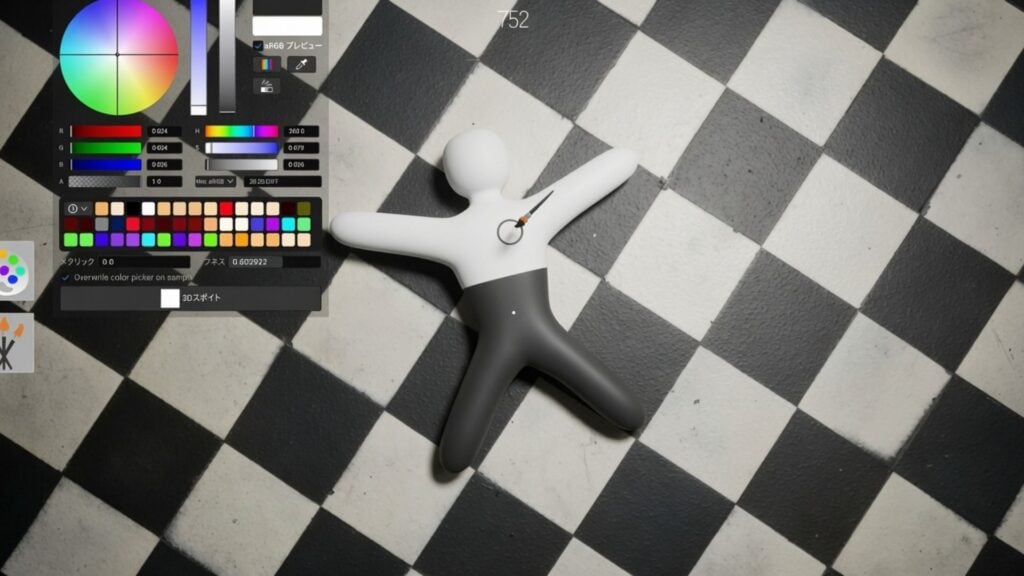
Meccha Chameleon‘s gameplay loop is dead simple to grasp. You’re a white blobby humanoid, split into 2 teams. Hiders use a color picker and an eyedropper to paint themselves into the environment. Seekers have a clock running and need to flush everyone out before time expires. No tutorial. No menu lecture. The first match teaches you everything.
Three modes round out the package. Standard sticks to classic Hiders vs Seekers. Infection turns caught Hiders into new Seekers, snowballing chaos as the round progresses. Double has everyone hide first, then flips into a free-for-all where the goal is finding the most other players before time runs out. Lobbies can scale up to 24 players, though lemorion_1224 recommends sitting between 2 and 10 for the best balance of chaos and performance.
The pose system is where things get genuinely clever. Curl up into a ball to fake a fruit. Lie flat to read as a wooden plank. Hug a wall to disguise yourself as artwork. Each pose reshapes the silhouette enough to push the disguise into uncanny territory. Paint plus pose is the heart of the game, and getting it right is genuinely satisfying.
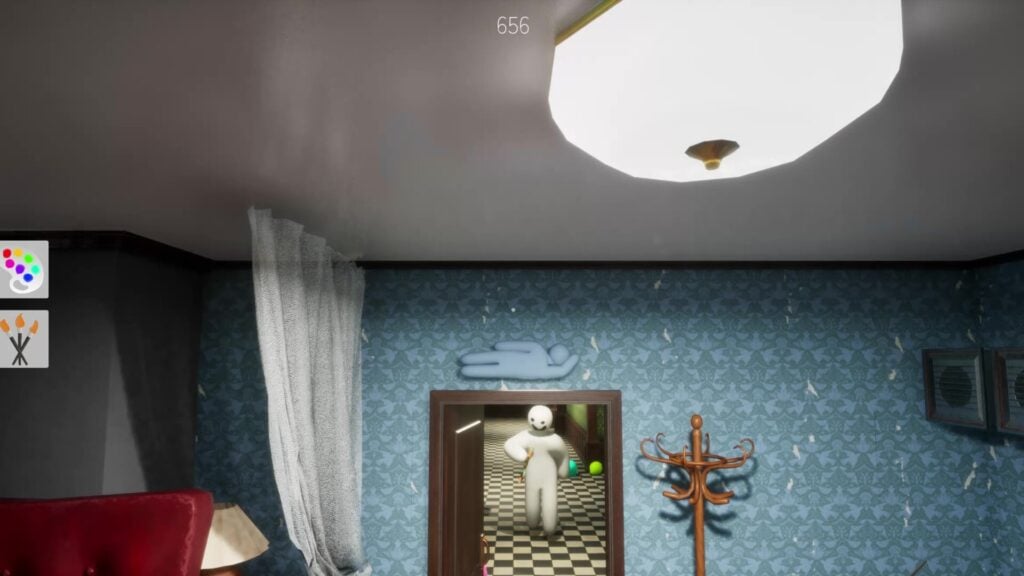
Meccha Chameleon‘s signature high comes from a single moment. A Seeker walks past your hiding spot. They’re maybe 10 centimeters from your blob. They don’t see you. That kind of payoff is genuinely rare in modern multiplayer games, and Meccha Chameleon serves it up on a loop. The best camouflage spots demand real color matching work with the eyedropper. Pair that with a pose pitched to the scenery and you’ve got yourself a near-invisible hide.
The painting tools themselves aren’t flawless. The color picker has bugs that come and go. The eyedropper sometimes pulls a different shade than what’s on screen. Players have reported picking one hue and watching another get applied. Complex surfaces with gradients or pattern detail expose the tool’s limits hard. lemorion_1224 has pushed several patches already to tighten the precision, but there’s still daylight between the current state and where it needs to be.
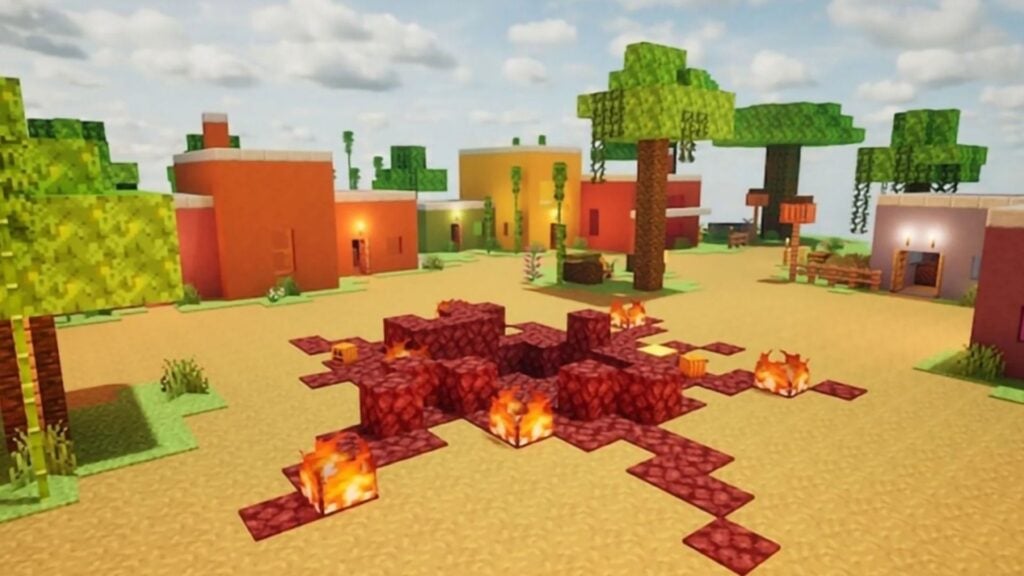
5 official maps at launch is thin for a game pitching itself on replay value. lemorion_1224 saw this coming and shipped open modding tools from day one through Steam Workshop. The community didn’t waste time. Within 30 days, 99 custom maps had hit the Workshop. The lineup includes faithful rebuilds of iconic locations. Among Us’ Skeld is in there. Original maps sit alongside fan recreations of the Backrooms or full Minecraft builds.
The June 13 1.2.0 update made the modding workflow dramatically easier. Loading mods doesn’t require rebuilding the server anymore. Community maps boot up faster and play smoother. This kind of mod openness is probably what keeps Meccha Chameleon alive long-term. Strip out the Workshop and you’re left with 5 maps and a quickly fading novelty. With it, the game has a near-bottomless content well to draw from.
For a party game whose whole pitch is goofing around with friends, Meccha Chameleon does the worst possible thing. It makes connecting with friends a nightmare. Steam invitations don’t reliably arrive. The « Join Friend » button from Steam‘s friends list fails silently more often than it works. Plenty of players end up spending more time fighting the system than actually playing the game together.
The public lobby search system makes things worse. Filters are bare-bones, and the matchmaking feels random in practice. Two friends searching at the same time with identical server tags can end up in completely different lobbies. Steam reviews flag this exact issue as a deal-killer. « Until the invite/join system is fixed, I cannot recommend this game, » one player puts it bluntly. For a multiplayer game built entirely around playing with people you know, this kind of breakdown isn’t a minor bug. It’s the whole game falling over.
riends can’t connect? Public lobbies are the fallback. But public matches expose another big problem. Without friends bringing the right energy, most players in public lobbies don’t bother with the paint mechanic at all. They just hide in dark corners and stay blank. The creative artistic side of the game vanishes completely. The 3D humanoid silhouette is also pretty recognizable even painted well, which kills the appeal of hiding in plain sight.
Moderation tools, or rather their absence, finish the job. No vote kick. No ban. No way to report a user. The server browser is awash in racist, sexist, and outright hateful names. Lobby griefers can open their mic or drop chat messages to leak Hider positions to the Seekers. For a game that’s moved 5 million copies in 2 weeks, the lack of basic moderation feels like a serious oversight. It needs fixing fast.
The 2-month dev cycle shows up in plenty of places. The user interface feels heavy and unintuitive across the board. The player list takes up far too much real estate on screen. Menus eat clicks for basic actions. The distinction between private and public rooms isn’t obvious for new players. None of it is broken, exactly. It just feels rough.
Visual bugs add to the early-access vibe. Hiders sometimes show up paint-free in spectator mode. The server status occasionally renders in white text. Nameplates skip showing up at all on certain logins. lemorion_1224 ships fixes at a steady pace and stays open about known issues. But the cumulative effect is a game that still feels like it’s working through its rough edges, official release or not.

Scroll gaming news
Salut ! Moi c'est Barnabé, l'assistant gaming de RetroGems ! Pose-moi tes questions sur les jeux vidéo, les actus ou le contenu du site. Miaou ! 🎮
Tapez pour rechercher
Comments
Log in to comment
Continue with GoogleBe the first to comment on this article!