


Discover Gemstream
Scroll gaming news

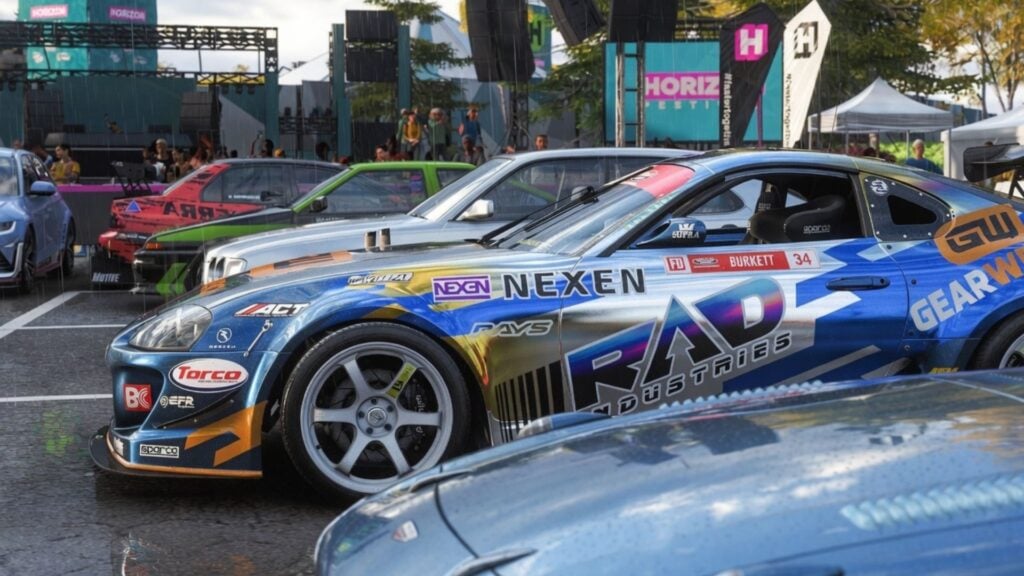
Forza Horizon 6 from Playground Games drops its wheels in Japan on the largest map in franchise history. Five years after Mexico, the pressure was immense. Tested on PC with an RTX 4090 and 64 GB of RAM after more than 40 hours of gameplay, here’s our verdict.
Japan has been the most requested destination from fans for years. Playground Games didn’t let them down. The map condenses the central Honshū region, from the farmland plains of greater Tokyo to the snow-capped Japanese Alps. The coastline, industrial port zones and rural countryside flow into each other without ever crossing dead empty stretches. Tokyo is split into four distinct districts: downtown with Shibuya and Akihabara, the residential suburbs, the shipyard, and the industrial zone inspired by the legendary Daikoku parking area. The city is officially five times larger than the urban environment of Guanajuato in FH5.
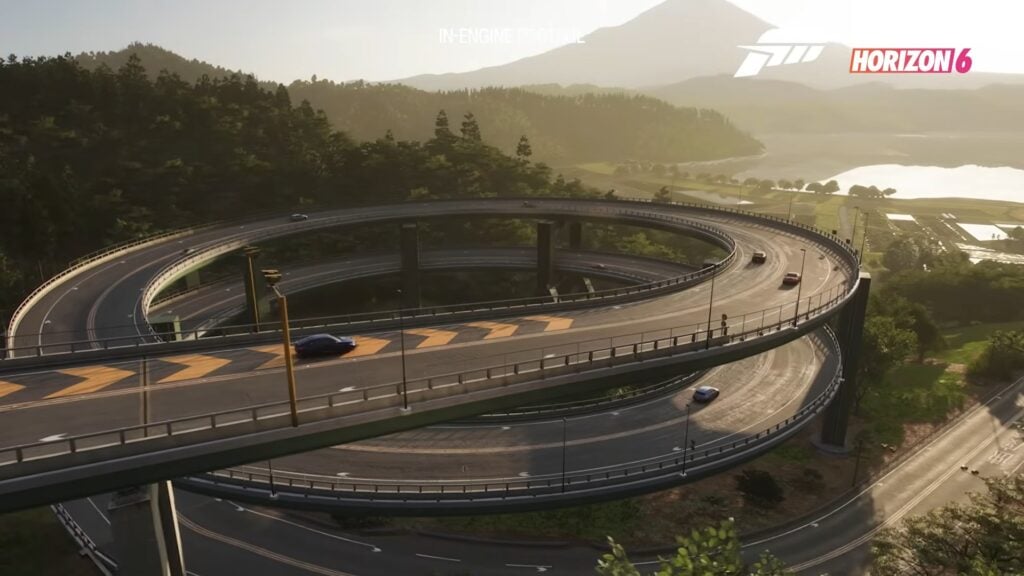
The mountain passes are the real masterstroke of this map. The Akina circuit, directly inspired by Mount Haruna made famous by Initial D, recreates its five consecutive hairpins with satisfying technical accuracy. Japan stacks elevation changes and surface variety into every kilometer, where FH5 offered mostly flat terrain. You go from neon-lit night highways to snowy Alpine roads in minutes of driving.
Touge battles are timed duels on the narrow mountain roads of Japan. The precision required for weight transfers on descent, the art of holding your line through hairpins without losing rhythm — it’s a mechanic that radically transforms how you approach mountain roads. It didn’t exist in previous entries. It gives the game its strongest identity.
These duels integrate naturally into the open world with no special prep required. Light JDM machines like the Toyota AE86, the Nissan Silvia and the Mazda RX-7 find their natural habitat here. The tension generated by a technical descent in a tight duel down the Akina circuit is unprecedented in a Forza Horizon game. It’s the one new feature that alone justifies the Japanese setting.
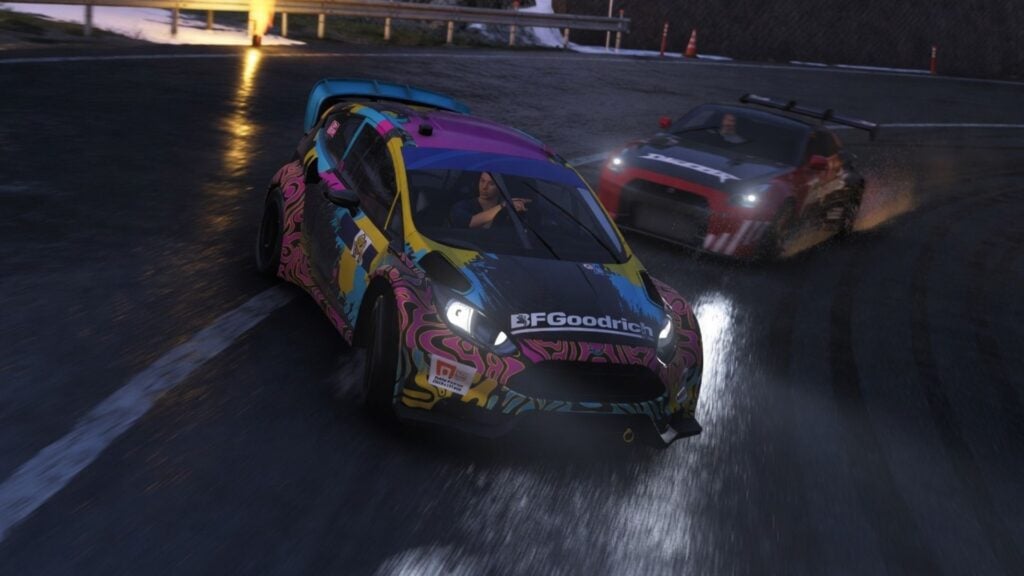
The driving model has clearly benefited from lessons learned in Forza Motorsport. Powerful cars no longer slide unpredictably the moment you touch the throttle. Weight transfers are more readable on wet roads and narrow mountain paths. Car behavior genuinely changes with the surface. On Tokyo’s dry asphalt, cars are predictable and precise. On the snowy roads of the Japanese Alps, they demand a radically different approach to racing lines. On dirt and gravel, grip degrades progressively rather than cutting out, giving you time to correct.
Switching from an S-Class car to a Class B no longer requires relearning the physics from scratch. The transition feels evolutionary rather than jarring. The driving animations have been redone with a full 540 degrees of steering wheel rotation. Feedback through corners is more communicative and trajectory corrections happen more naturally than before.
The sound design received a deep overhaul. Every engine now has a more dynamic sonic signature with clear distinctions between intake and exhaust notes. V8s rumble with more depth. The rotary engines of the Mazda RX-7 have been completely rebuilt and finally sound like their real-world counterparts. The inline-sixes of the Nissan GT-R and Toyota Supra have also been reworked. The radio features more Japanese artists and reinforces the audio immersion in a way that’s coherent with the setting.
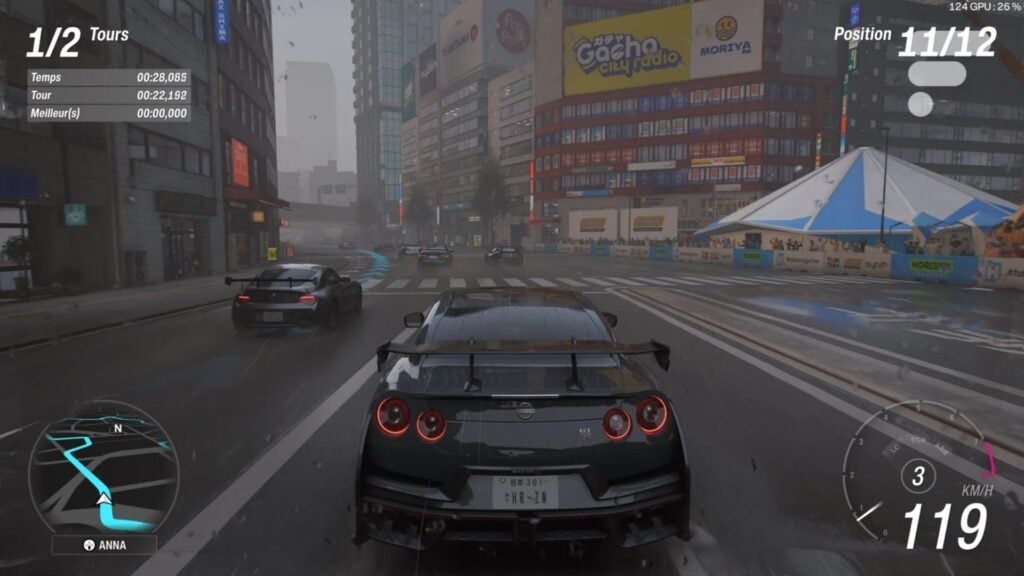
Forza Aero has been fully reworked. Front splitters and rear wings are now tailored to each model rather than generic. Headlights and taillights benefit from new refraction effects that look more realistic. Forza Edition cars push customization even further with modifications impossible to replicate through standard tuning. The Mazda MX-5 Forza Edition fitted with a V10 and visible turbos is the most striking example. Garages are now fully customizable with dedicated display areas you can share with the community.
That said, body kits remain too rare to do justice to the bosozoku and VIP style cultures the Japanese setting naturally calls for. Fans of the Japanese underground scene were expecting a customization system as deep as the universe the game is plunged into. It’s visible progress but not enough. You can now paint liveries directly onto windows — a franchise first. But the gap between what’s here and what fans hoped for after five years of waiting remains very real.
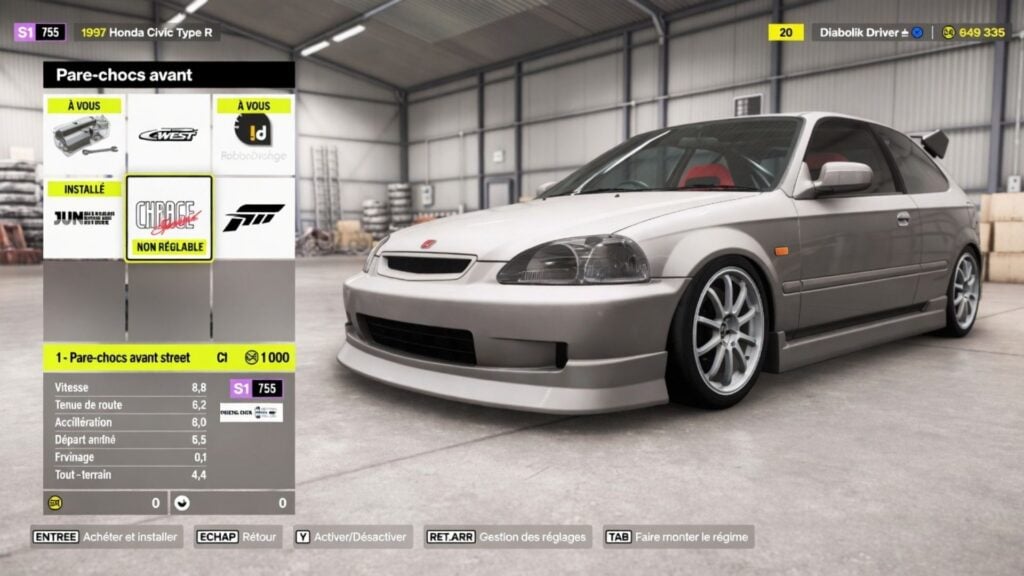
Nighttime in Tokyo with ray tracing cranked up on PC is a graphical showcase. The reflections on bodywork, the layered neon signage and the tunnels amplifying engine notes make these moments the most beautiful in franchise history. The game design behind 550 cars is flawless, with exceptional JDM representation.
During the day, the palette often feels washed out and desaturated. It’s a choice that’s consistent with the real Japan, greyer and more humid than the Mexico of FH5. But after several hours, it starts to wear. FH5 was sometimes too saturated. FH6 swings the pendulum too far the other way. A balance between the two would have served such a successful map far better.
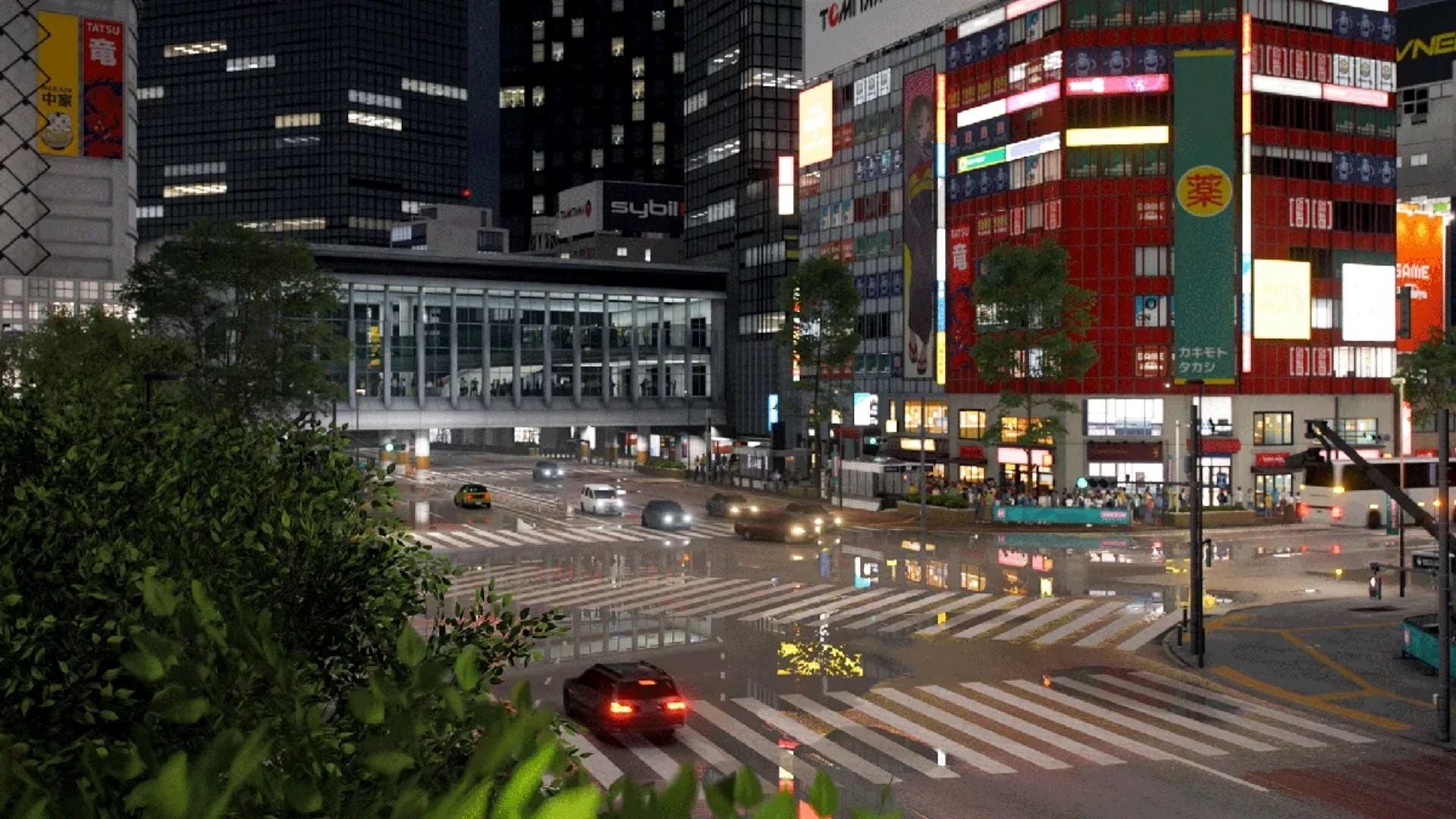
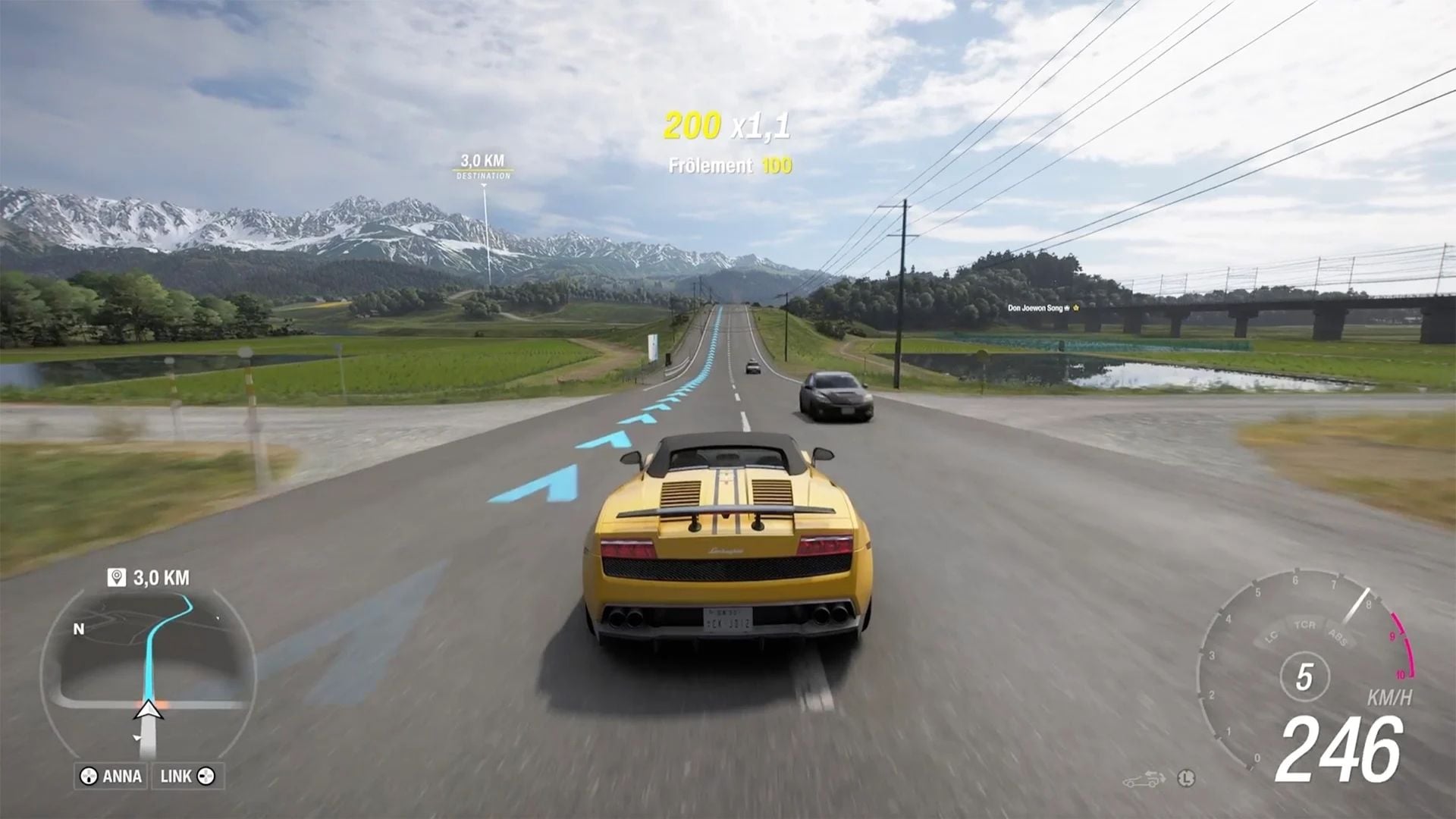
Past the beauty of the map, Forza Horizon 6 delivers a Horizon Festival that’s nearly identical to the Mexican one. Touge battles represent only a tiny fraction of the total content. The drift school is disappointing. The scooter delivery missions are a gentle caricature of Japanese culture. The festival dialogue plays during events, making the narrative inaudible when you’re focused on a lap timer.
The progression structure is identical to FH5. You unlock Wristbands, chain through races, PR Stunts, Barn Finds and XP boards. The in-game economy is too generous. With the Premium edition, you start with 30 cars including some hypercars. Credits pile up without any real effort. For players who found their pleasure in car-by-car progression, the Standard edition will feel more satisfying.
The Drivatars AI remains problematic. Too aggressive at the start of an event and inexplicably bad afterward. Erratic behavior and NPC pile-ups create traffic jams in corners. Off-road races are the hardest hit. Gaps blow open the moment the AI loses its bearings on unmarked terrain.
This isn’t a new problem in the franchise. It’s especially visible in FH6 because the new touge and drift mechanics expose unpredictable rival behavior more than ever. These issues are patchable. As shipped at launch, they undercut the tension the game is trying to create.

Scroll gaming news
Salut ! Moi c'est Barnabé, l'assistant gaming de RetroGems ! Pose-moi tes questions sur les jeux vidéo, les actus ou le contenu du site. Miaou ! 🎮
Tapez pour rechercher
Comments
Log in to comment
Continue with GoogleBe the first to comment on this article!