
Discover Gemstream
Scroll gaming news

System Era Softworks is back with STARSEEKER: Astroneer Expeditions, a co-op spin-off of Astroneer published by Devolver Digital. The game launched on June 11, 2026 in Early Access for PC (Steam), Xbox Series X|S, PS5, and Nintendo Switch 2 at $29.99, with a day-one drop on both Xbox Game Pass and PC Game Pass. We tested the game on PC with an RTX 4090 and 64 GB of RAM over several Expeditions aboard the ESS Starseeker. Here’s our verdict.
System Era Softworks is a fairly modest studio based in Seattle, best known for Astroneer, originally released in 2016 (and pushed to a full 1.0 in 2019). The original racks up over 120,000 positive reviews on Steam and still pulls a daily concurrent player count of roughly 3,500 nearly a decade after launch. The studio clearly took a swing with STARSEEKER: Astroneer Expeditions by skipping a traditional Astroneer 2 in favor of a spin-off built entirely around cooperative extraction.
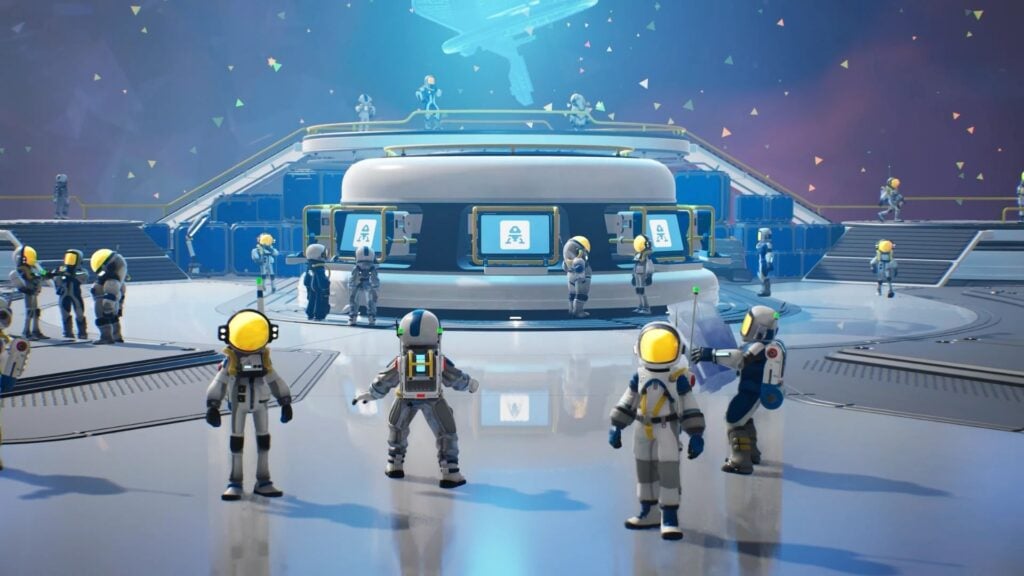
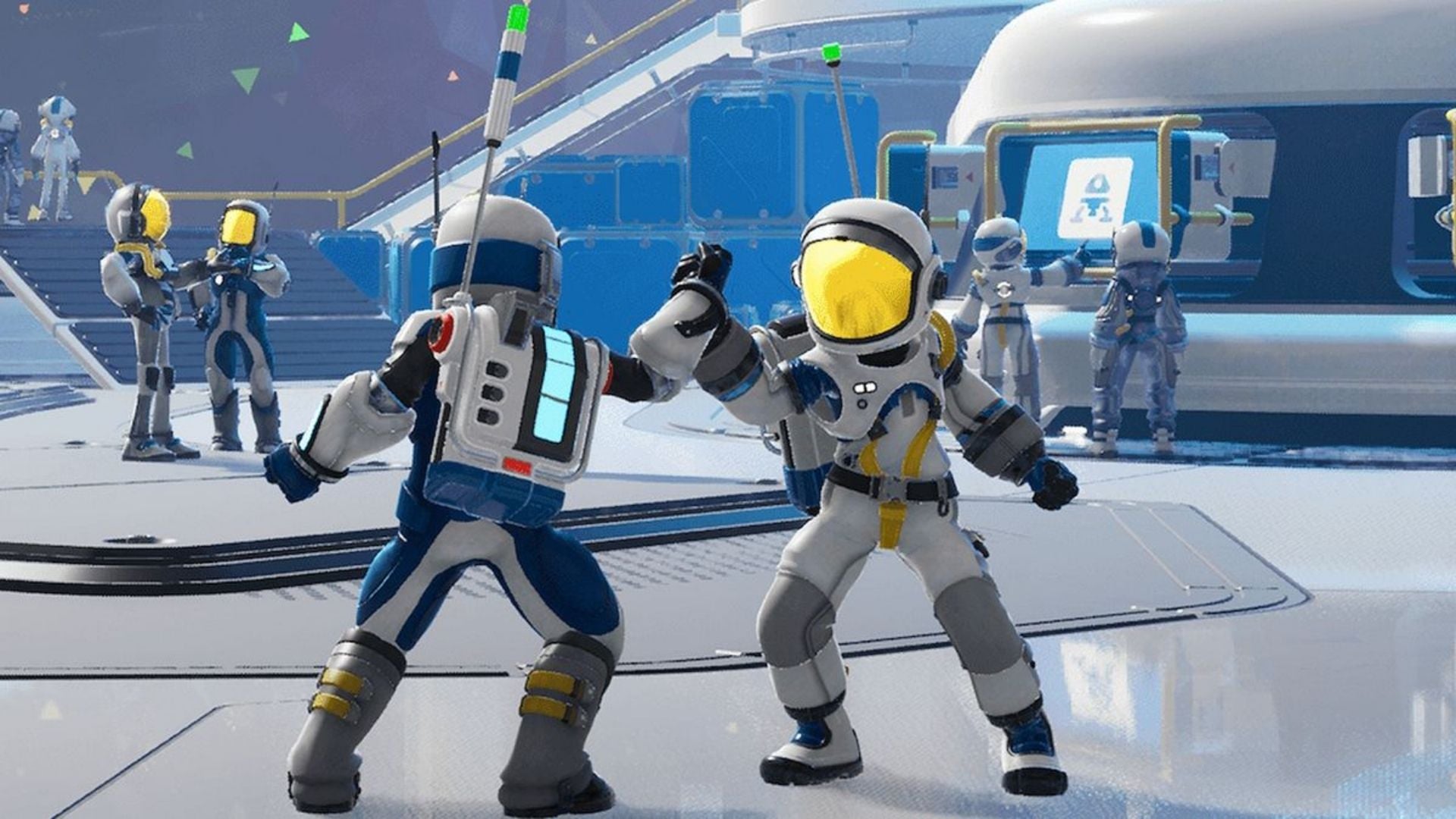
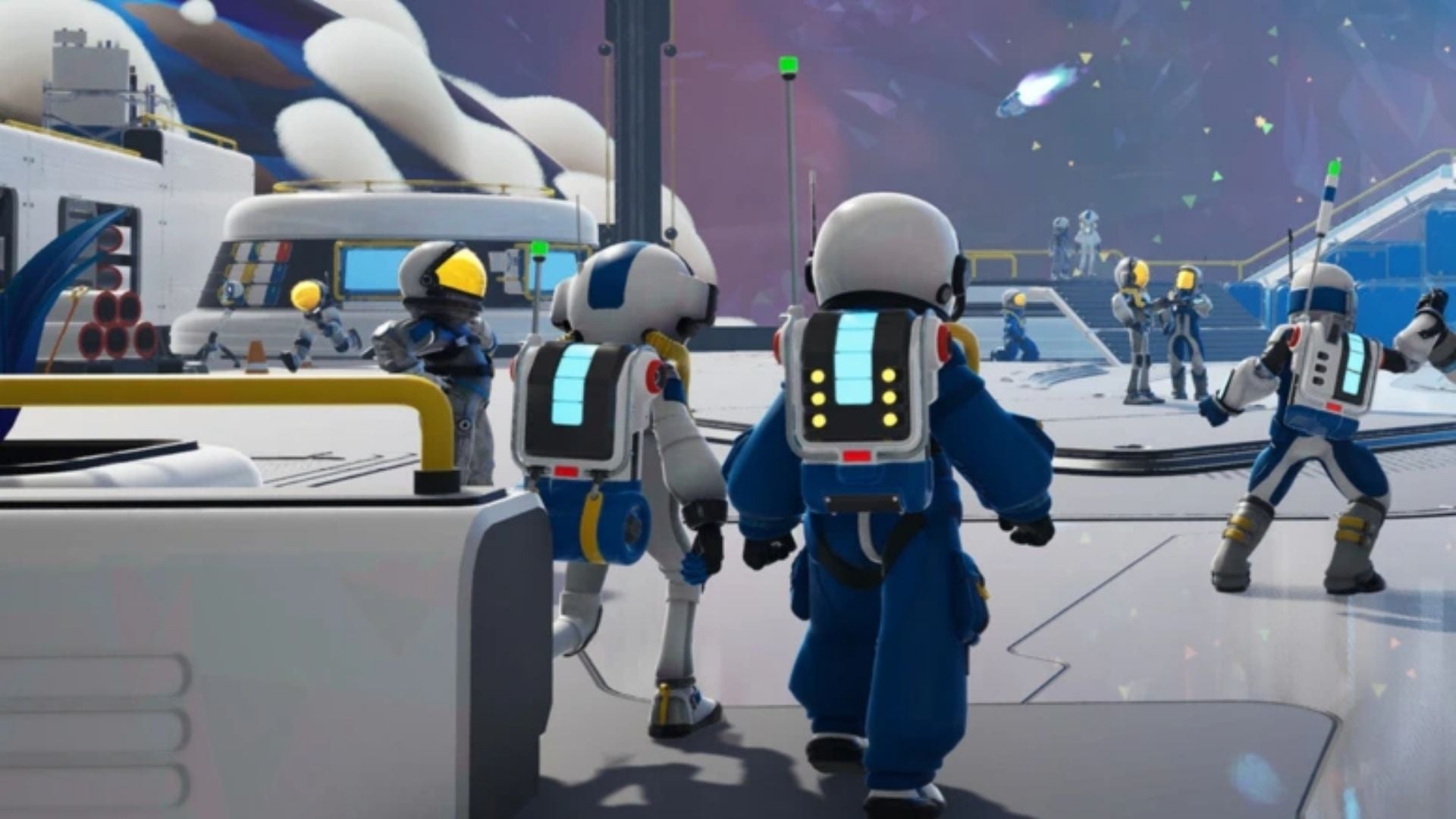
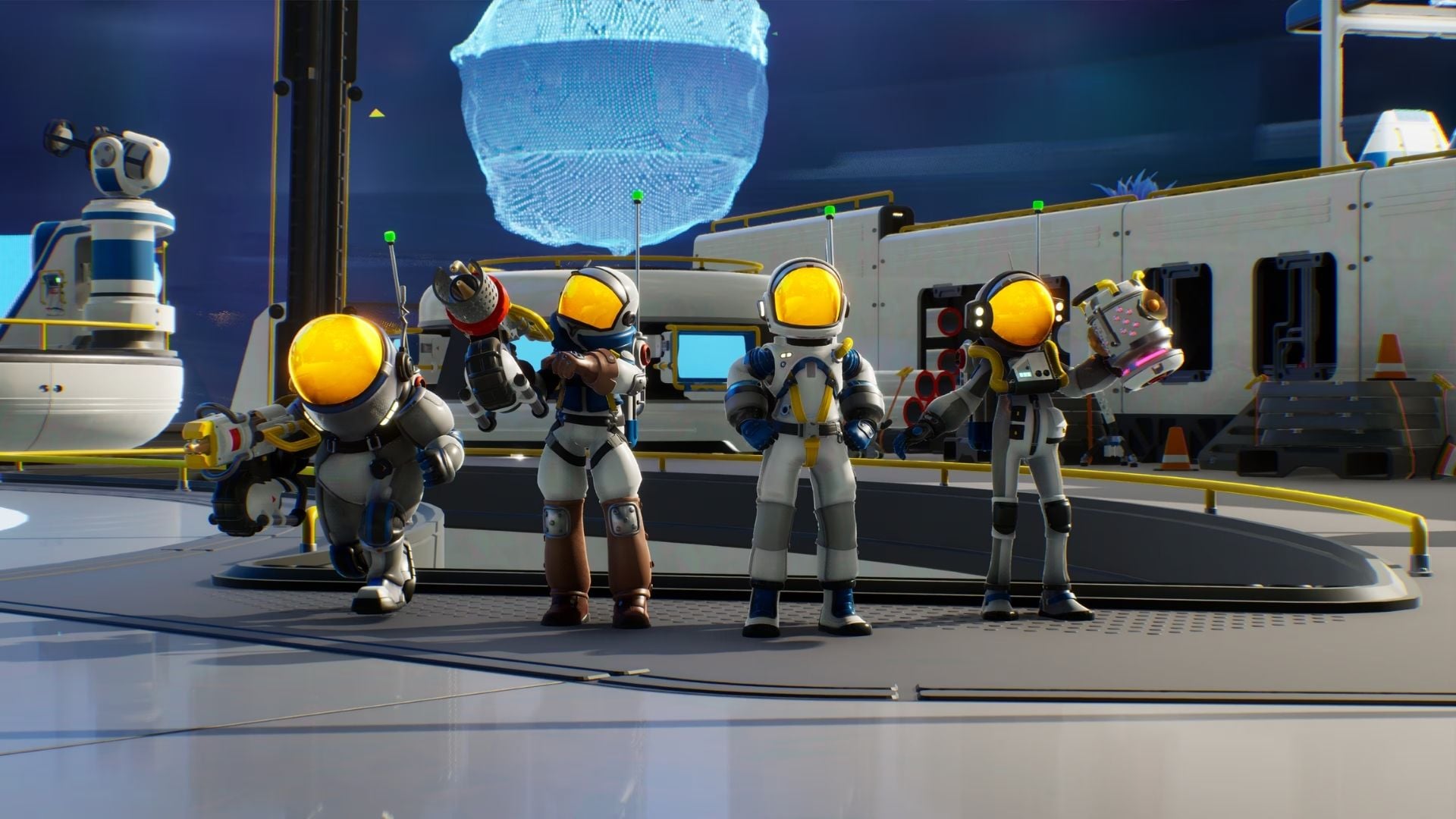
The ESS Starseeker is the central hub, a space station orbiting unknown planets. Players form Squads of up to four members and embark on timed Expeditions of roughly 30 minutes down to the surface. Up to 16 players can share a planet at once across multiple Squads, while 60 players can mingle inside the hub. On paper, it’s an ambitious blend of the modern extraction shooter rhythm grafted onto the laid-back sandbox exploration Astroneer made popular. In practice, several design calls quietly gut the experience.
The first major issue with STARSEEKER is the mandatory multiplayer setup. There’s no offline solo mode. The ESS Starseeker hub is itself always online, which means even a player who just wants to play solo has to stay connected to the servers at all times. Multiple Steam reviews flag that certain home WiFi networks outright refuse to connect to the servers, with no workaround in sight.
The Squad system is sold as a way to play with friends, but random players can still drop into your session while the system is enabled. That’s a design failure that kills any hope of small, private co-op sessions. Server disconnects are also common during transitions between planets, which simply wipes whatever progress you made during that Expedition. For a game built around cooperative play with friends, these calls are baffling and they kill the early enthusiasm of any group session within a couple of hours.
The Explorer Class Astroneer tutorial runs for a couple of minutes and skims the basics: movement, climbing, scanning, mining, and gadget crafting. The problem is that it doesn’t actually prepare anyone for what comes next. If you bail out of the tutorial halfway through, you have to restart the whole thing from the opening cutscene, no resume option in sight. The swappable nozzle system, the extraction loop, the thrown-item mechanic for sedating creatures, and the entire resource management layer get barely a passing mention.
The result on the ground is rough. Players hoover up items constantly with no clue what any of them do. Bytes, Baubles, Task Tokens, Disposable Nozzles, EXO Caches, Aberrations, they all get tossed at you with no real explanation. You hoard resources following nothing but gut instinct and try to craft gear based on guesses the game never bothers to validate. A full beginner’s guide has basically become required reading just to figure out what you’re supposed to be doing, and even with one open in another tab, certain systems stay murky after several hours of play. It’s the exact opposite of what a four-player co-op title should be doing in Early Access.
The oxygen-as-Expedition-timer is easily the standout idea in STARSEEKER. Each run caps out at roughly 30 minutes, and the oxygen gauge drains constantly, faster when you sprint, mine, or use the air blast. That constant time pressure forces you to plan your routes, pick your objectives, and budget your way back to a Landing Site to summon the Dropship and head home. It’s a genuinely smart design call that captures the tight rhythm of modern extraction shooters and grafts it onto a sandbox exploration loop.
The catch is that this tension gets steamrolled by extraction bugs on a regular basis. Players report cases where the Dropship simply never triggers despite every condition being met, or server disconnects that drop you back at the hub mid-flight with partial loss of whatever you collected. On our RTX 4090 rig with a stable fiber connection, we hit at least two full disconnects during our test window, one of which wiped over 20 minutes of run progress. When the central idea of your gameplay depends on infrastructure this shaky, the whole system caves in.
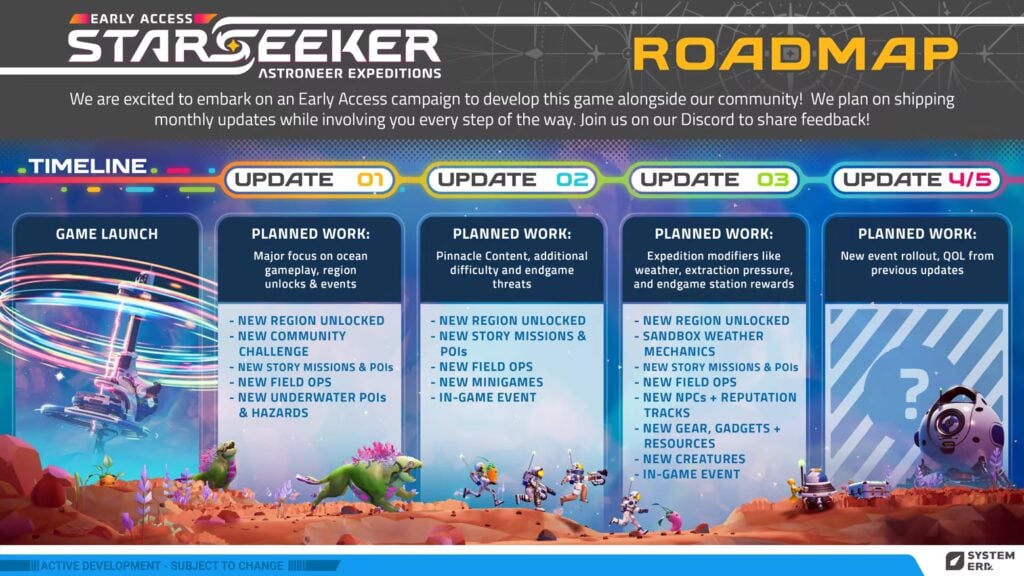
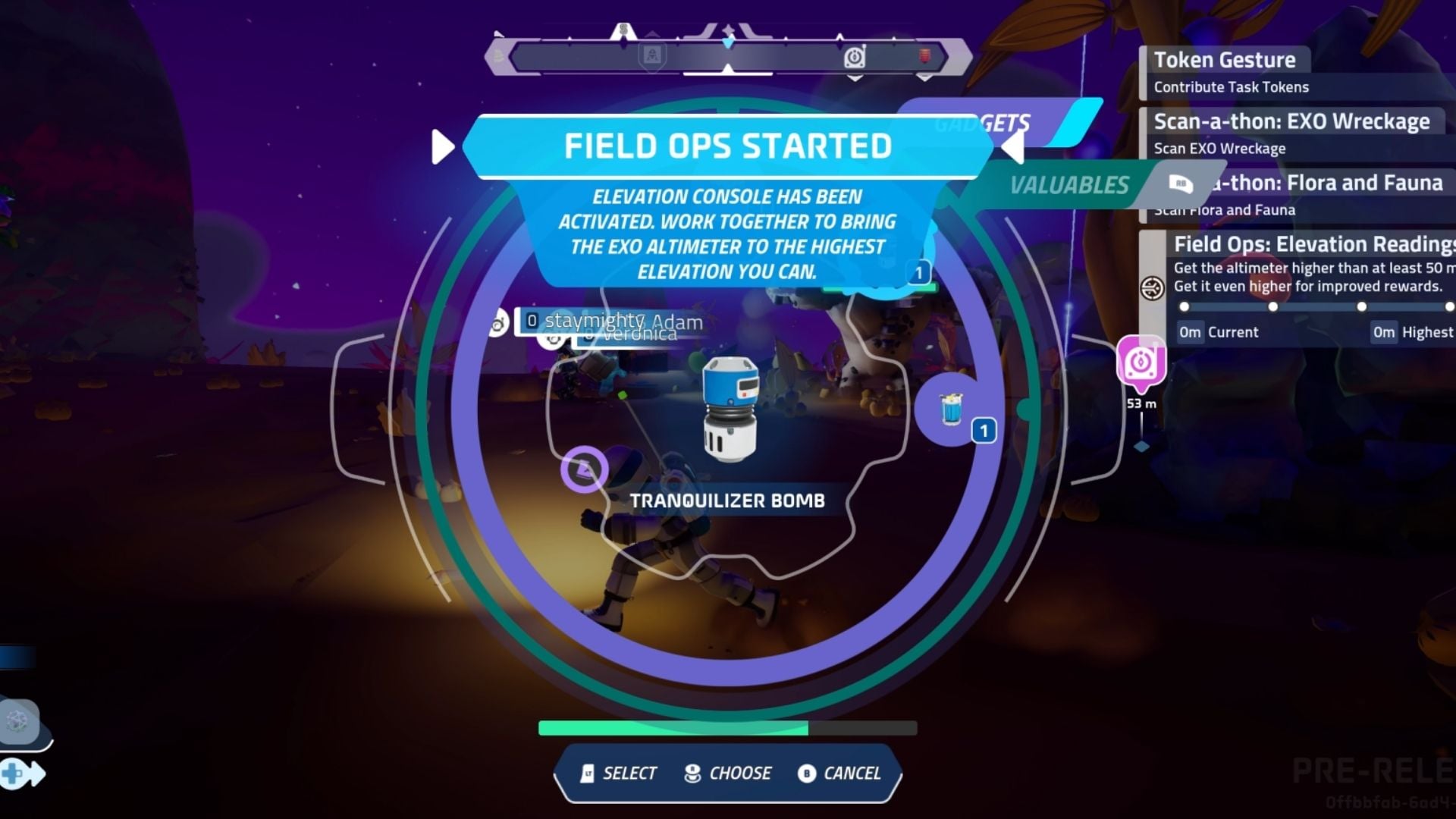
The Early Access content offering is clearly thin. The number of planets, biomes, and mission types available at launch stays very limited for a game that sells exploration as its core pitch. After a few hours, you’re running the same objectives on a loop: scan stuff for Bytes, fetch resources for Tasks, crack open EXO Caches, and rinse-repeat through Missions. Field Ops and Community Challenges add a bit of variety on paper but don’t really shake up the core formula.
The user interface also struggles with clarity. Key info on resources, active contracts, and extraction conditions sits buried in a poorly hierarchized HUD. On Steam, the game sits at 49% positive across 377 reviews at launch, parking it firmly in Mixed territory with a majority of users walking away unhappy. A common refrain in negative reviews is that the game feels more like an alpha than an actual Early Access, pointing to the broader lack of polish. The studio is promising regular patches, but the trajectory hinges entirely on how fast those fixes ship in production.
System Era Softworks publicly stated that STARSEEKER would ship with no microtransactions. Yet from day one, a paid cosmetic bundle is sitting right there in the in-game store, in direct contradiction with that original promise. The bundle focuses on visual personalization for your Astroneer with no gameplay impact, but the move did not sit well with a community already rattled by the broader launch issues.
That broken trust stacks on top of every other signal of a project that struggled to align marketing promises with the actual monetization model. The $29.99 price tag is reasonable for an Early Access title, and the day-one inclusion in both Xbox Game Pass and PC Game Pass makes the game effectively free for millions of subscribers. But the unannounced arrival of a paid cosmetic store creates a dissonance that complicates how the studio talks about the future of the project.
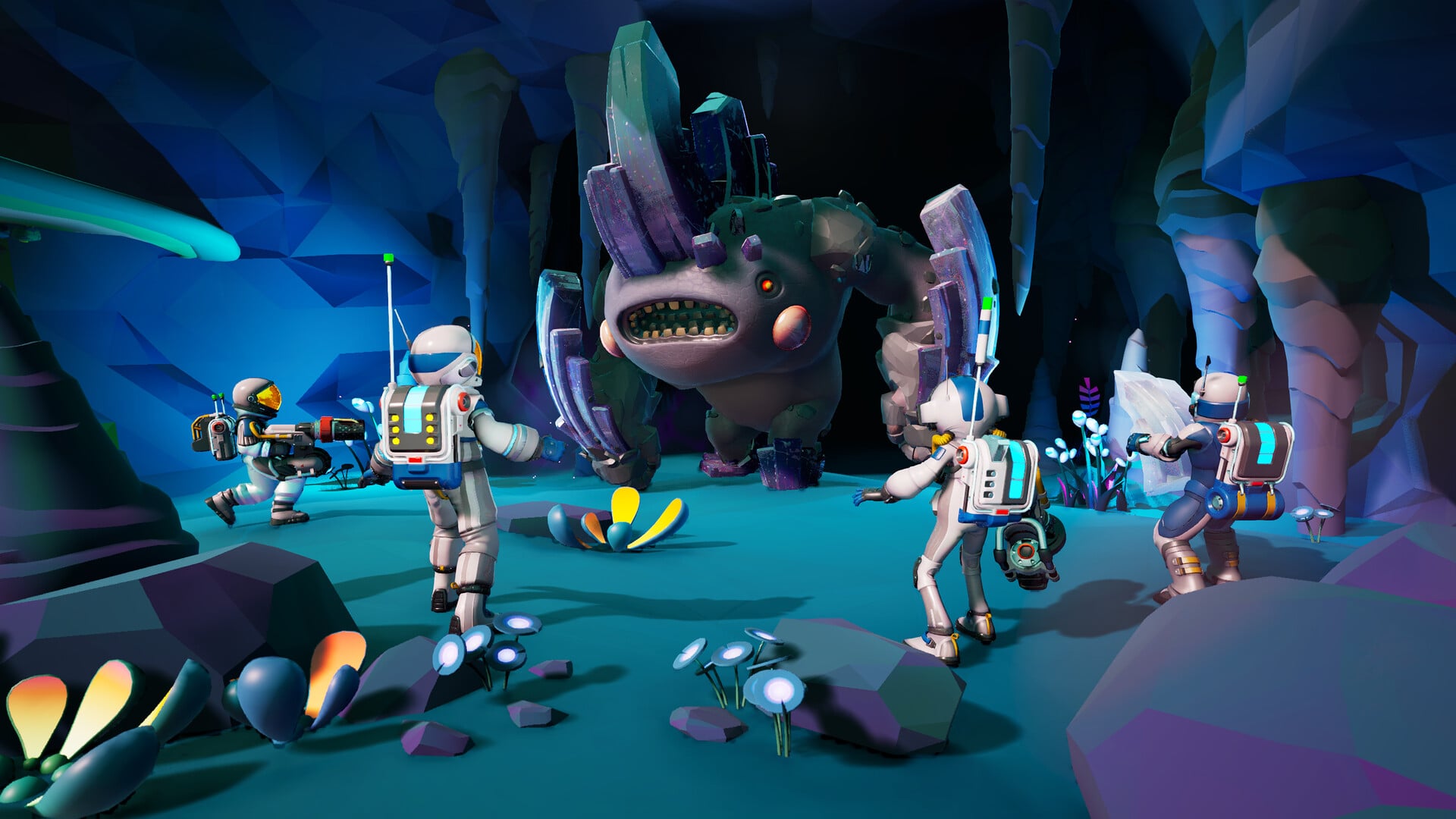
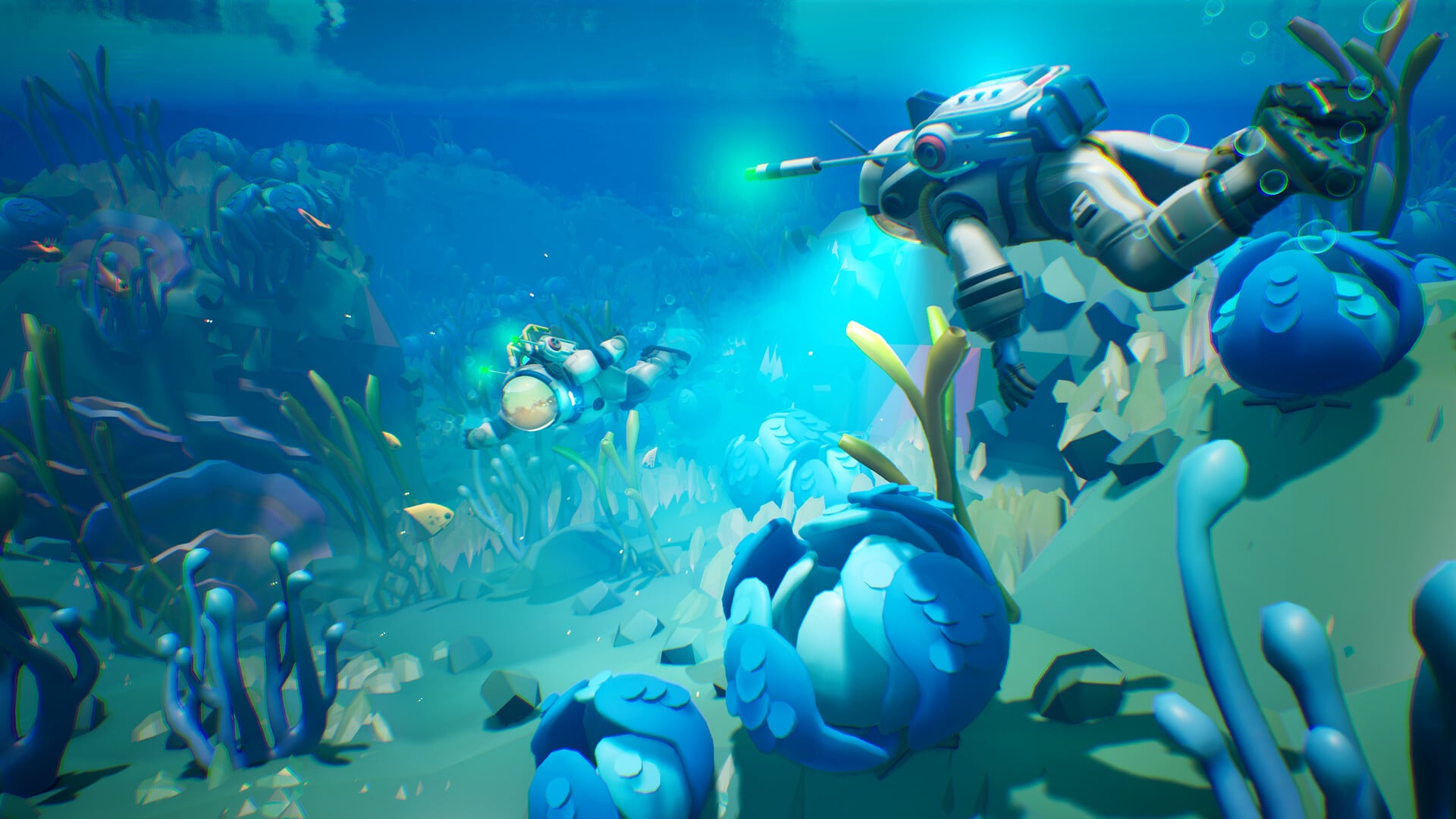
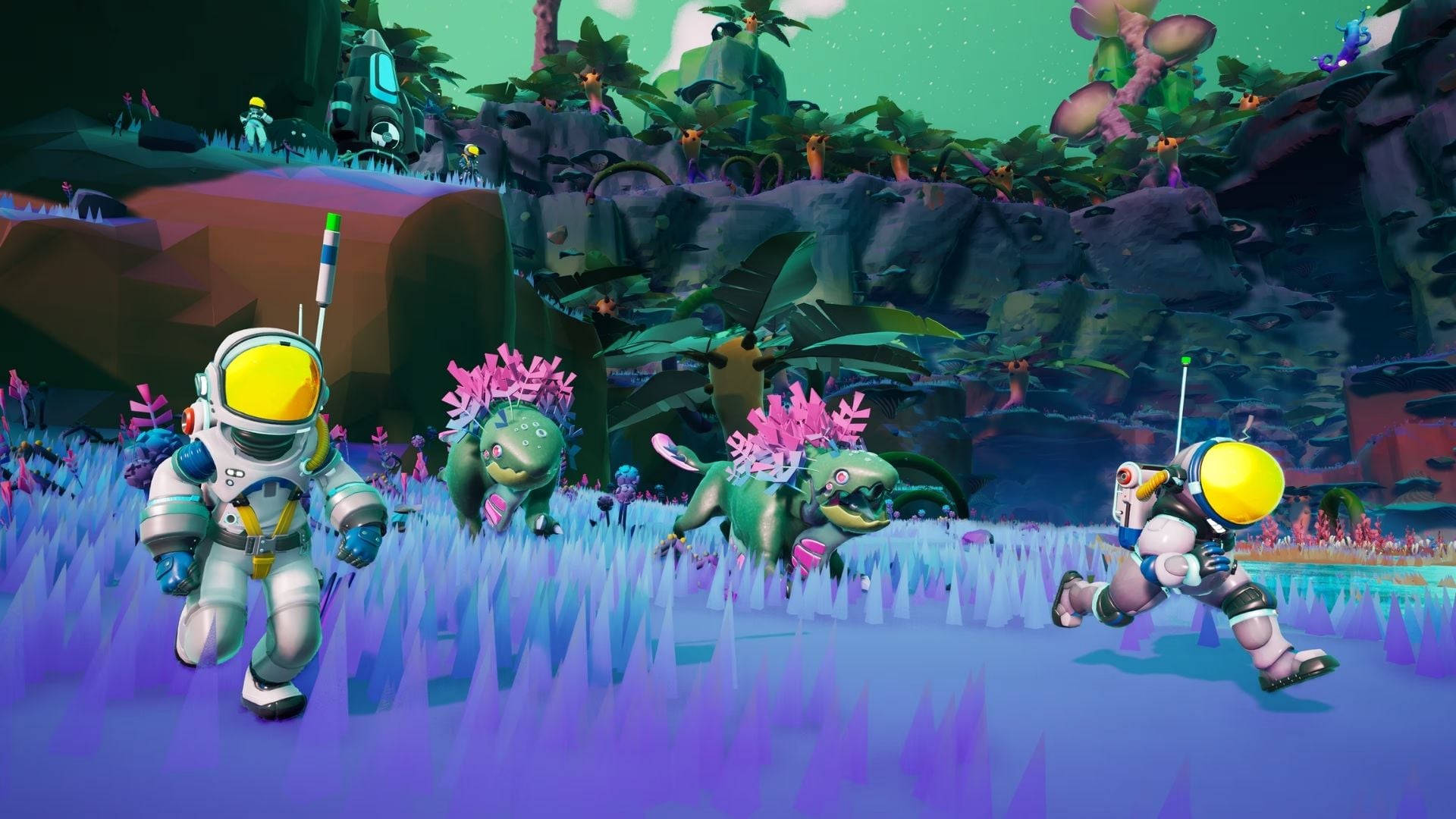
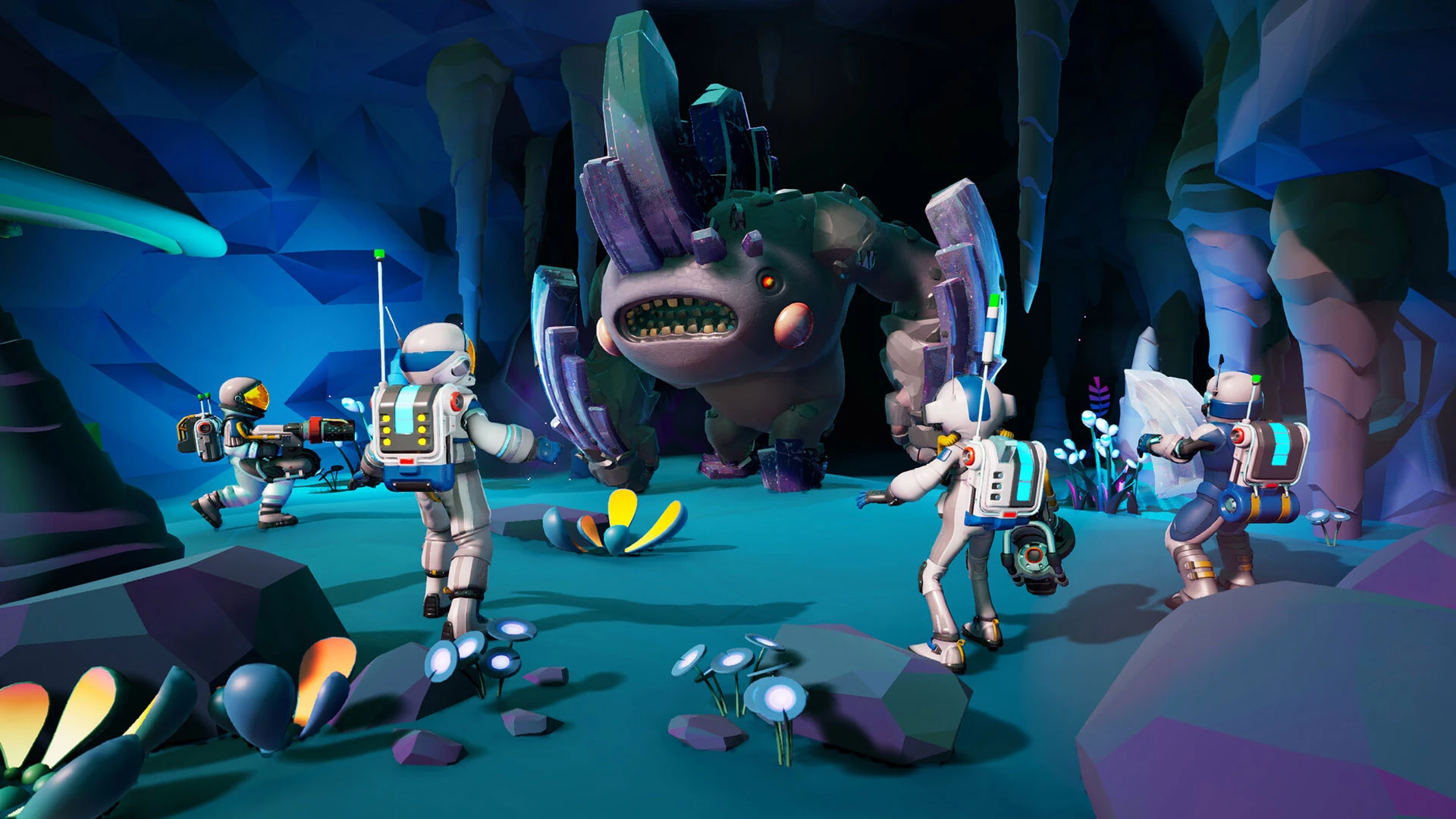
The Astroneer visual identity remains one of the genuine bright spots here. The handcrafted planets, the adorable creatures including the famous carrot-bugs, and the ESS Starseeker itself all live in the stylized, colorful palette the franchise made its signature. The art direction is instantly recognizable and lands particularly well in the more exotic biomes, where soft lighting and particle effects show off the various EXO Multi-Tool nozzles to good effect.
The in-game render, though, falls short. Multiple Steam reviewers describe the game as « a blurry mess » on their machines, and we did notice clear sharpness and anti-aliasing issues on our RTX 4090 even with everything cranked to the maximum. The creature animations are handled well and scanning them delivers real satisfaction. But the Astroneer character models sometimes show off-kilter proportions, and certain assets ported over from the original game don’t quite integrate into the new co-op setting. Optimization is broadly fine, which saves the day, but the overall polish sits well below what you’d expect from a Devolver Digital title in 2026.



Scroll gaming news
Salut ! Moi c'est Barnabé, l'assistant gaming de RetroGems ! Pose-moi tes questions sur les jeux vidéo, les actus ou le contenu du site. Miaou ! 🎮
Tapez pour rechercher
Comments
Log in to comment
Continue with GoogleBe the first to comment on this article!