



Discover Gemstream
Scroll gaming news

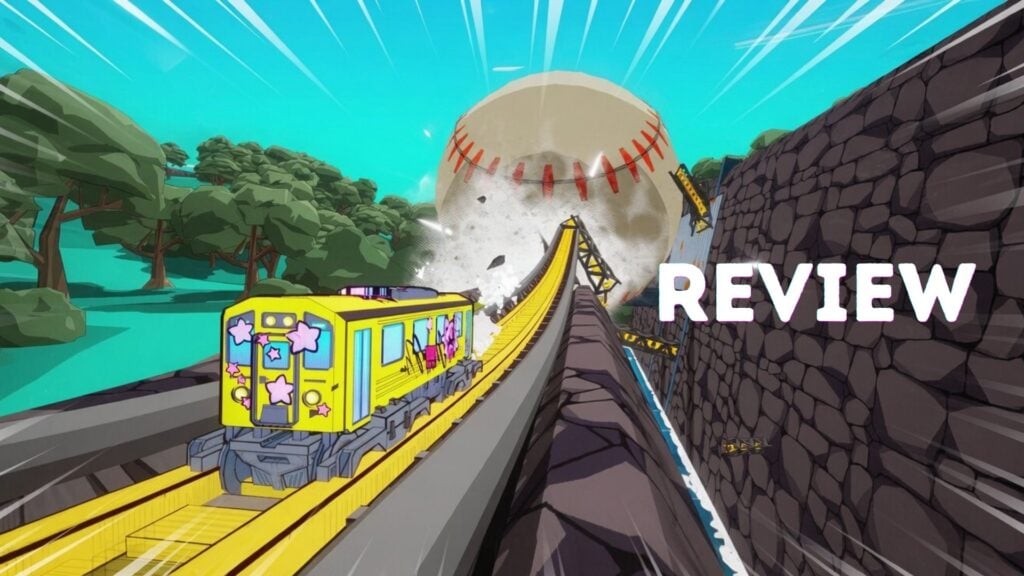
Denshattack!, developed by Barcelona-based Undercoders and co-published by Fireshine Games and Boltray Games, drops on July 15, 2026 on PC via Steam at $19.99. The game also lands on PS5, Xbox Series X|S and Nintendo Switch 2 at the same time with a day one Xbox Game Pass launch. Tested on PC with an RTX 4090 using a Steam key provided by the publisher’s press team. Here’s our verdict after roughly 20 hours of playtime.
Denshattack! rests on a completely wild premise. Players control a train that ignores the laws of gravity to chain tricks like a skater straight out of Tony Hawk’s Pro Skater. The concept sounds crazy on paper but locks in immediately from the first minutes of the tutorial. The core controls click within minutes with an intuitive setup. The game mixes braking through the horn, drifting through corners, jumping between adjacent rails and aerial dodges with full flips.
The cel-shaded art direction bursting with color is the first knockout punch of the game. Undercoders nails a japanese-inspired look that pulls directly from Jet Set Radio and Auto Modellista. The vibrant 3D rendering brings to life a dystopian Japan with pop colors despite its apocalyptic backdrop. The title runs flawlessly on RTX 4090 with a stable framerate even in the most chaotic gameplay segments. The fluidity is spotless and loading times are near non-existent between levels, which cranks up the arcade feel of the game.
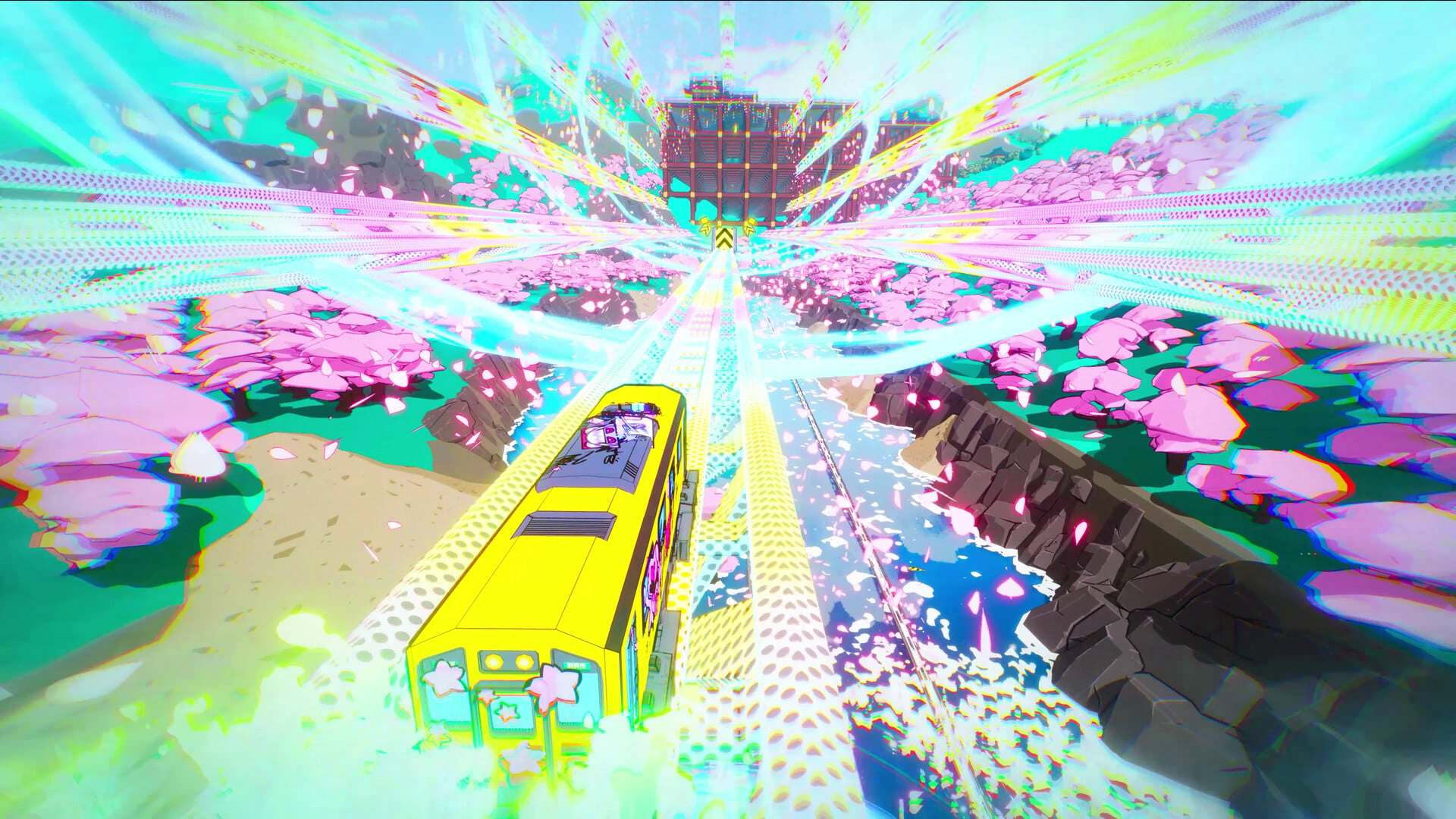
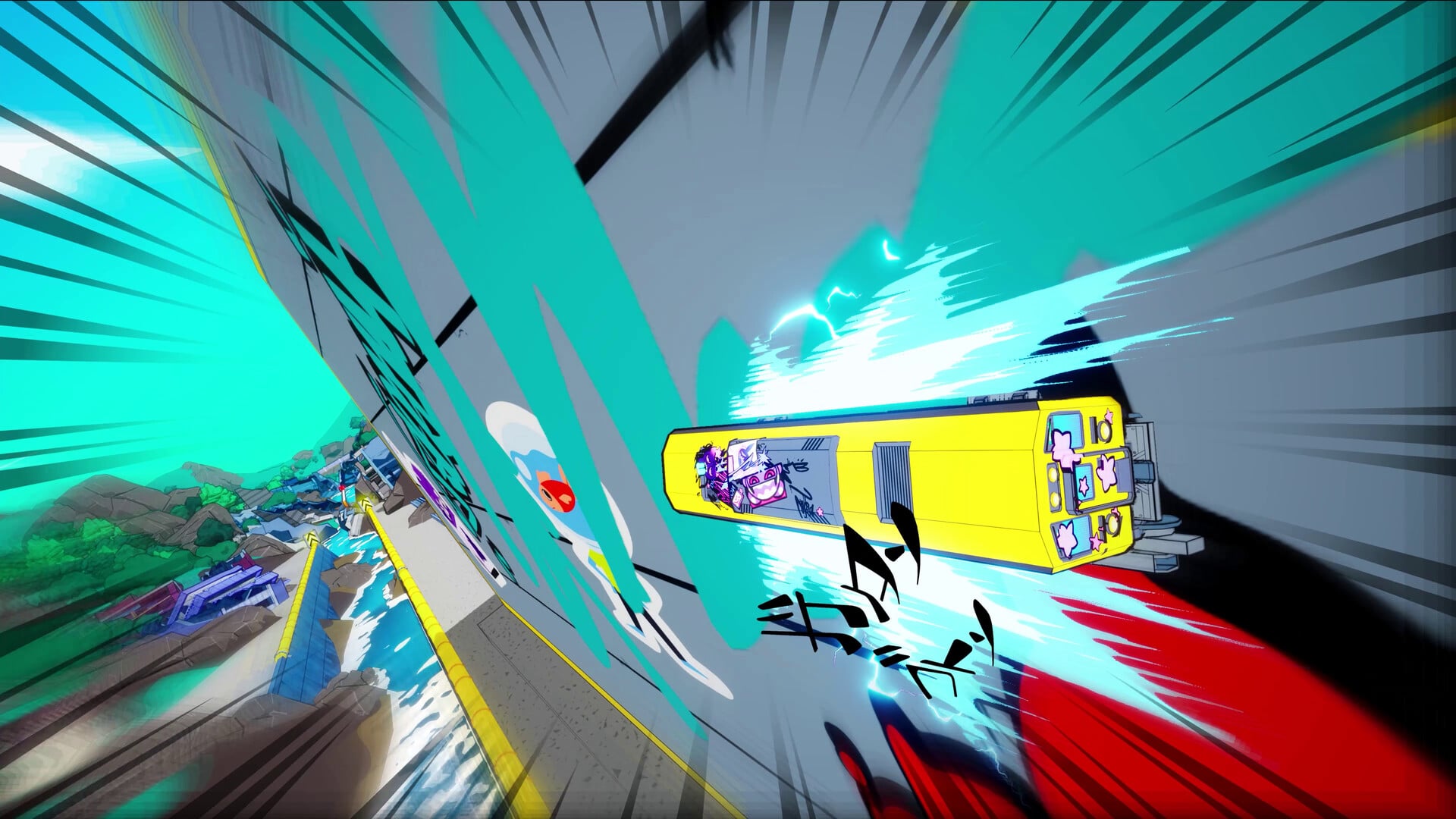
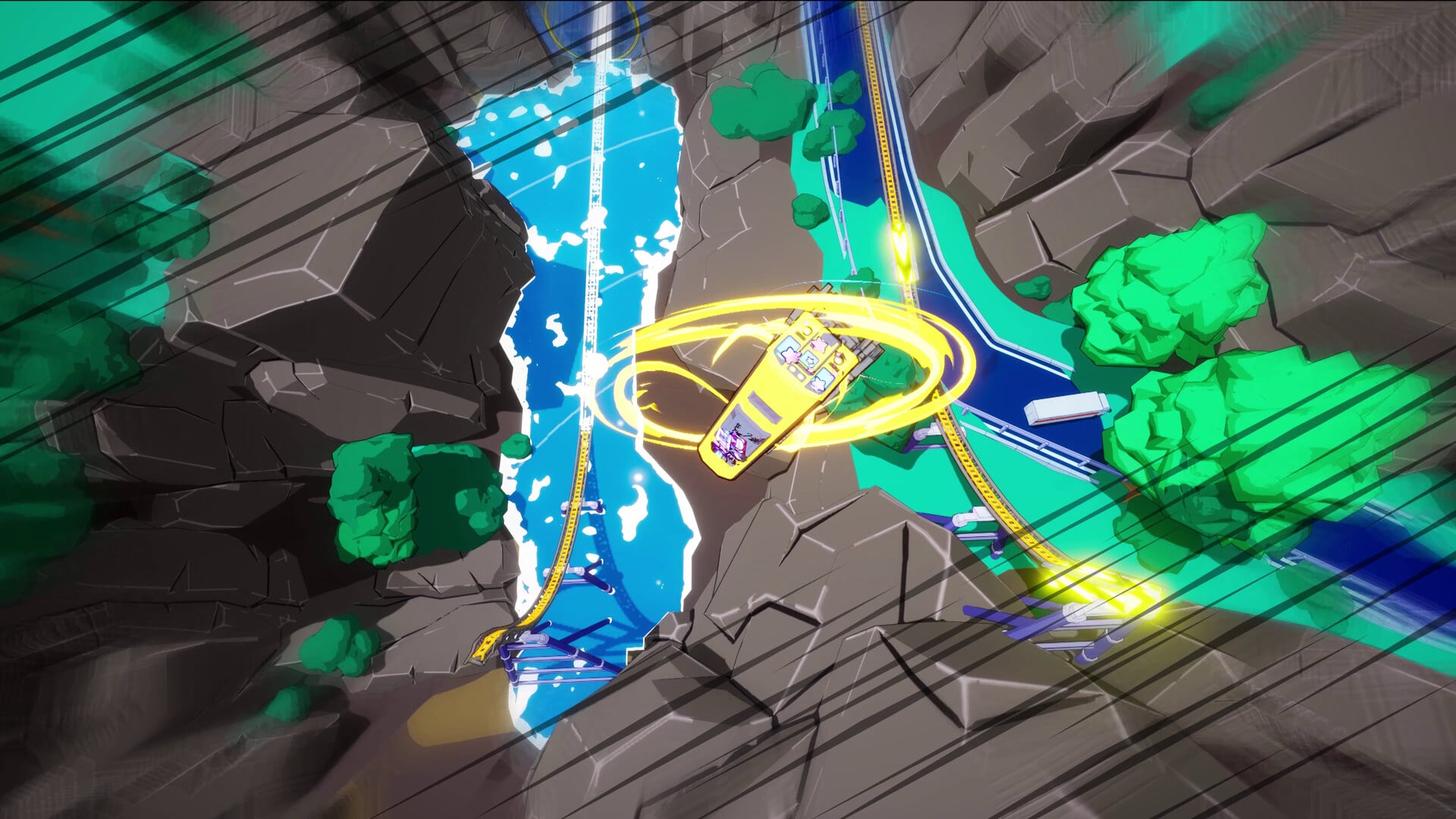
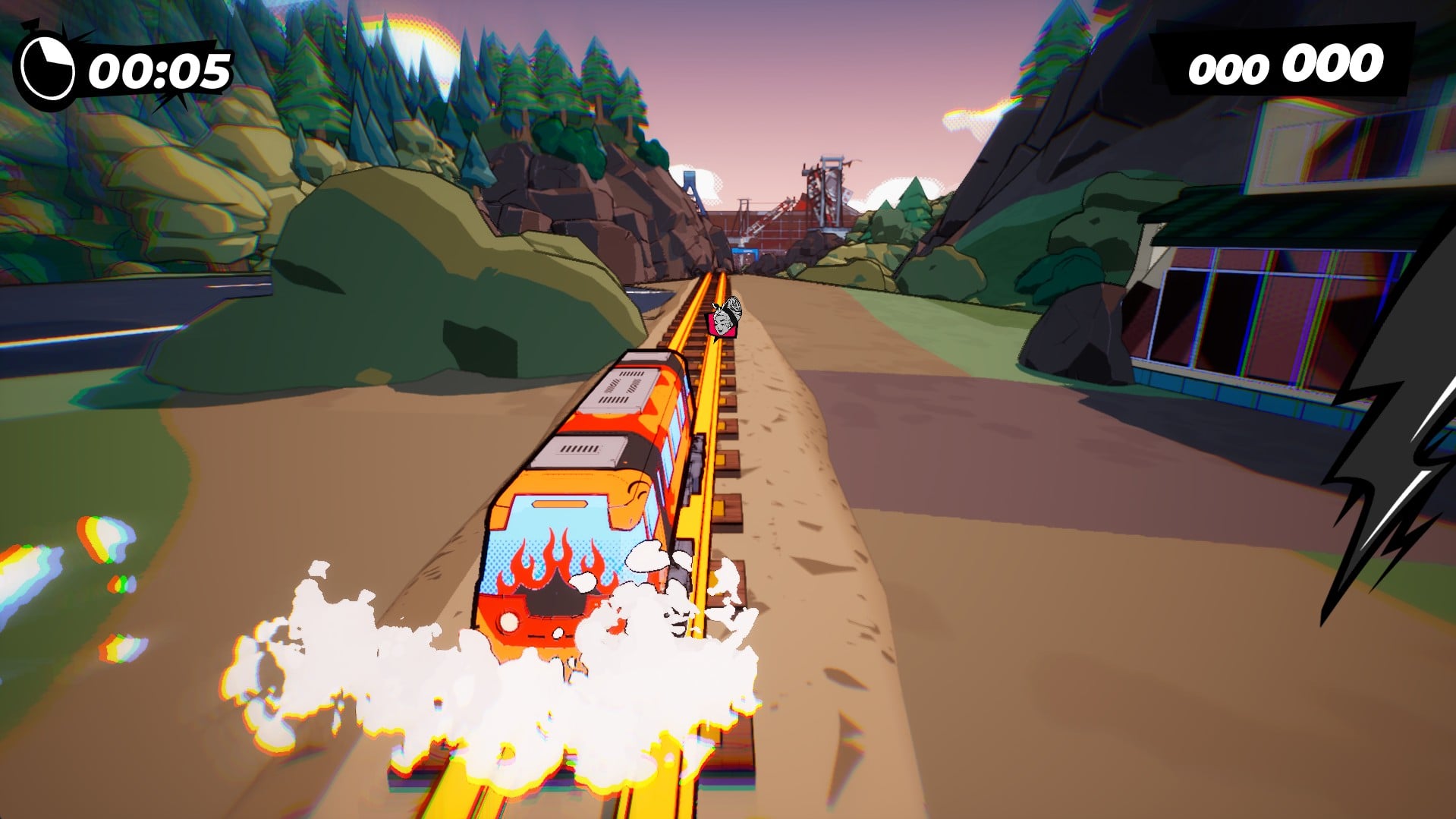
The true strength of Denshattack! sits in its pure gameplay across every run. The Tricktionnaire lists every trick available with its corresponding right-stick input combo. Flips, kickflips, grinds, wall-rides and ground pounds chain up naturally to build increasingly long score multiplier combos. The learning curve is perfectly calibrated to give players time to grasp the mechanics before rolling out the game’s true technical challenges.
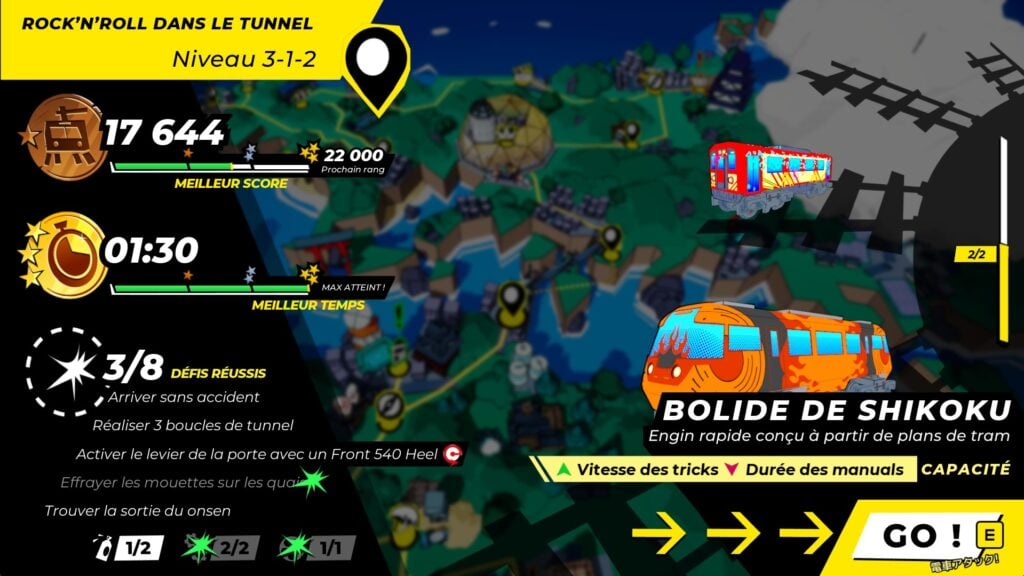
Each level offers 2 distinct medals and a dare checklist that drive replayability. The timing medal rewards fast runs on the main track. The scoring medal demands chained trick combos without breaking the multiplier. The dare checklist finally layers in extra objectives that shift from level to level. Dares often involve no-crash runs, 20-hit trick chains or the collection of every hidden collectible on the map. The no-crash dare proves particularly punishing and often demands multiple attempts to nail a perfect run before shifting focus onto the other objectives. Completing every level at 100% therefore requires several passes through each stage to check every box. This replayability significantly extends the lifespan well past the announced 8 hours of main campaign.
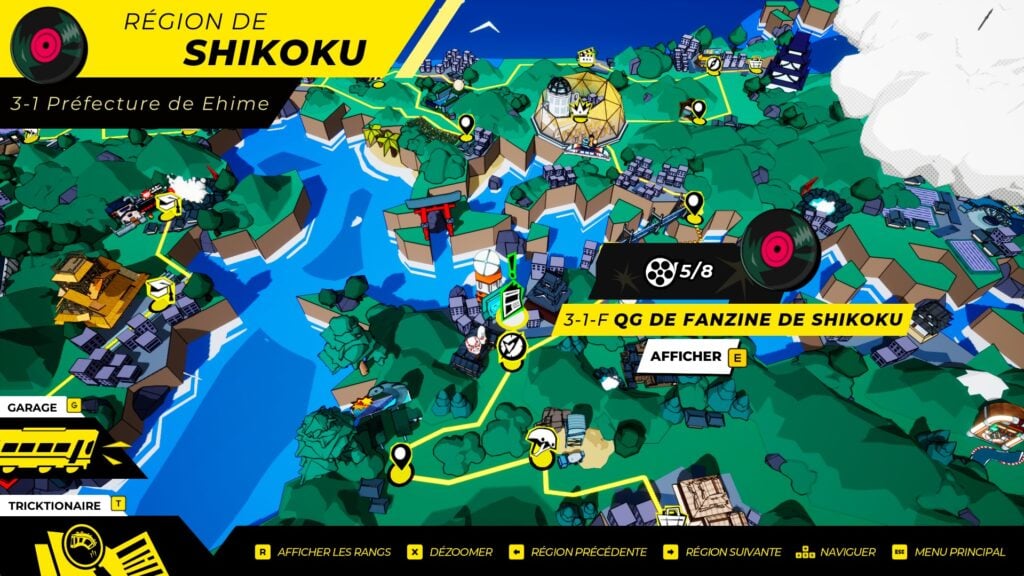
The progression structure channels the vibe of an old Super Mario Bros 3 with a **world map that unlocks stages as the adventure moves forward. The game packs over 50 levels spread across multiple regions of dystopian Japan. Players roll through the rural countryside of Kyushu and the domed metropolises of Osaka and Tokyo. The snowy stretches of Hokkaido wrap up the journey at the end of the game. Each region layers in its own terrain rules and specific hazards that force players to rethink combos and lines.
The variety of challenges dodges the trap of repetition over the long haul. Some levels require completing every objective within a closed circuit in the time allowed to validate the round. Others come as standard races against rivals with a dynamic overtaking system on the rails. Some tracks finally add specific gameplay mechanics to keep the experience fresh. The ferris wheel level temporarily flips gravity and fully rewrites how players read the track.
The boss fights are without a doubt the standout moment of Denshattack!. Each fight against a boss stages itself like a shonen anime with inventive choreographies on every showdown of the game. The first boss Yoshie in her magical girl mecha demands dodging her attacks through quick rail switches. Players must then hit back with precise grinds and ground pounds. The other bosses ramp up in absurdity with a living moving castle and giant mechanical worms. A full army of rival Denshattackers closes the final act of the game. The escalation of spectacle over the long haul stays consistent and every boss showdown sticks in memory long after putting down the controller.
The soundtrack of Denshattack! gets pushed as a major selling point of the game. The lead composer Tee Lopes is known for his work on Sonic Mania and TMNT: Shredder’s Revenge. He is backed by a lineup of over 20 guest composers on this ambitious project. Richard Jacques (Jet Set Radio), Ryo Nagamatsu (Splatoon, Mario Kart), Shoji Meguro (Persona), 2 Mello (Bomb Rush Cyberfunk) and Takenobu Mitsuyoshi (Daytona USA) all show up among the collaborators of this ambitious music project. The original soundtrack stacks up over 80 tracks and stands as the sonic showcase of the game.
The result delivers from the first hours with its jazz influences and its japanese-inspired pop sound that fit the visual mood perfectly. The funky tempo matches the tricks on screen and gives a nice punch to the runs. Players might feel however a slight sense of repetition after a few hours on the longest levels. The jazzy style could have benefited from sharper variations between tracks. This small drawback doesn’t ruin the overall enjoyment of such an ambitious music project.
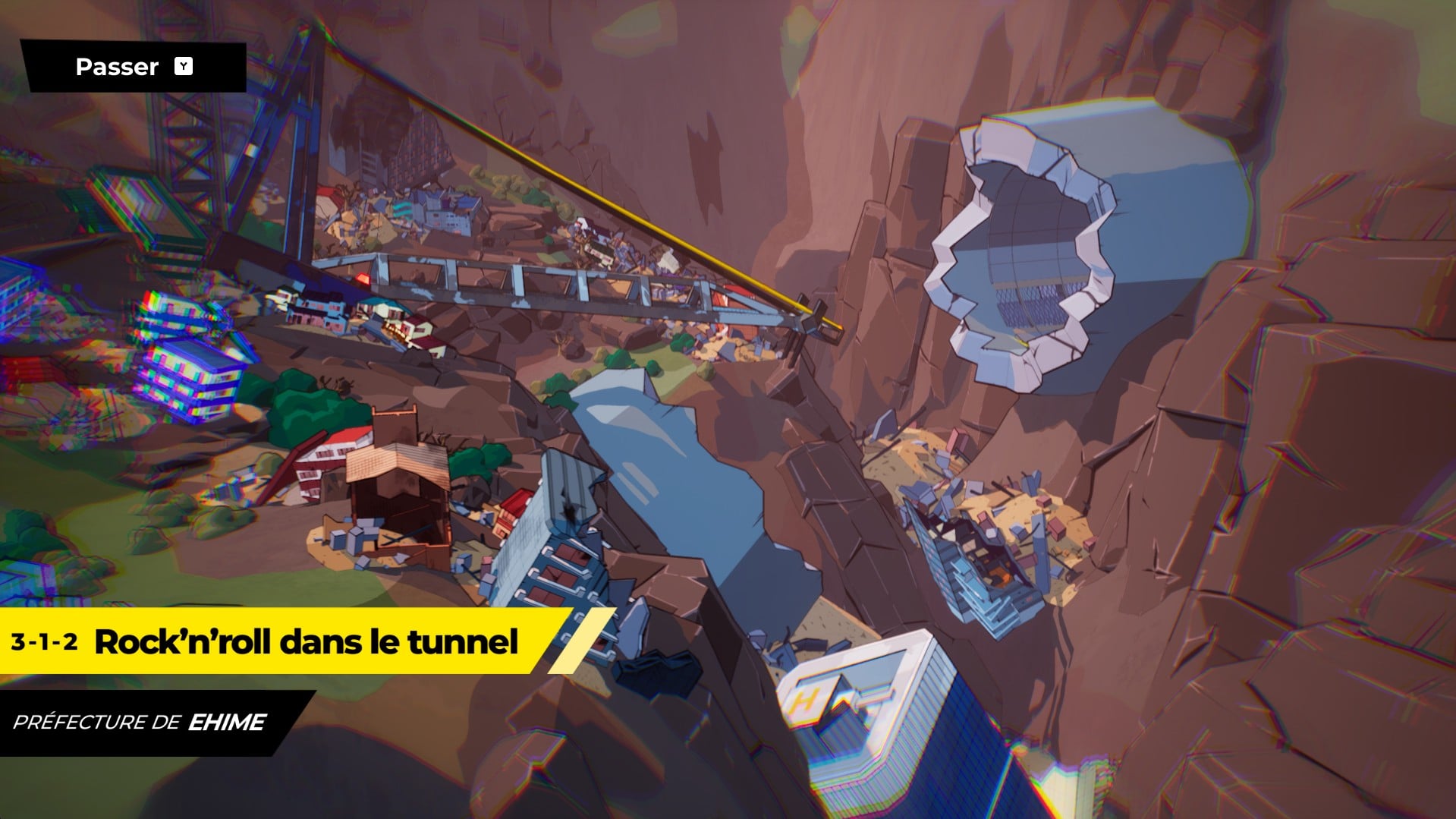
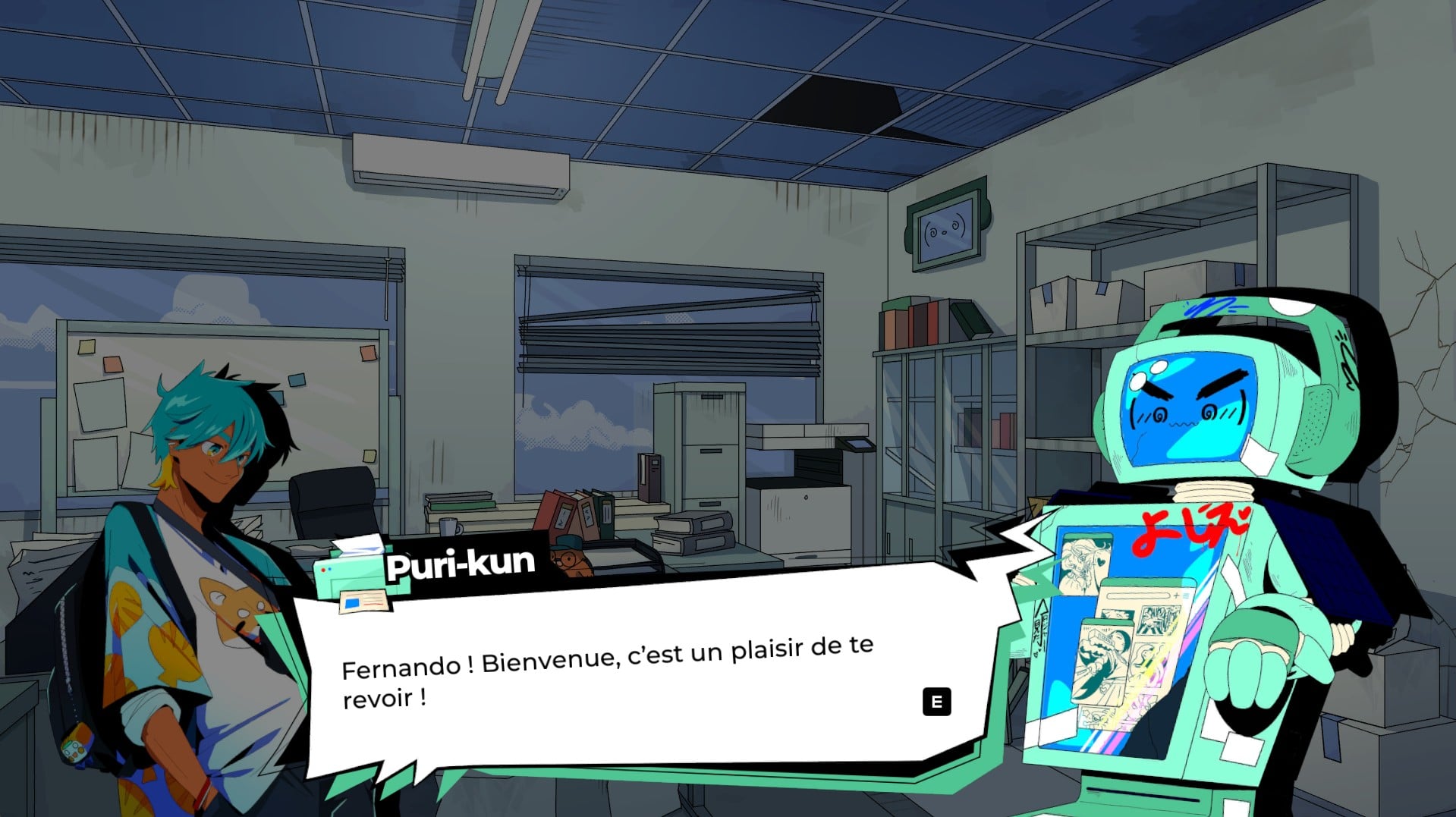
The Achilles’ heel of Denshattack! sits without a doubt in its storytelling. The game shoves its intro cutscenes before every level and its narrative sequences between stages on the world map. The problem hits twice with manga still frames. Characters mumble gibberish onomatopoeias in a fake language made deliberately incomprehensible to lean into the cartoon vibe. The effect grows honestly unbearable after a handful of levels and breaks the natural flow of the runs from one stage to the next.
The story itself of Emi the ramen delivery girl who joins the underground movement of Denshattackers against the Miraidō corporation stays anecdotal and pointless. It tells nothing genuinely interesting over the long haul and only delays the return to gameplay. The game would have clearly gained from an option to skip every cutscene and jump straight to the next level. Fans of pure gameplay will be tempted to spam the Skip button on every cutscene. This behavior underlines the narrative failure of the project. The off-topic storytelling stays the only real major complaint that we can level at a game otherwise very well built in its pure gameplay.


Scroll gaming news
Salut ! Moi c'est Barnabé, l'assistant gaming de RetroGems ! Pose-moi tes questions sur les jeux vidéo, les actus ou le contenu du site. Miaou ! 🎮
Tapez pour rechercher
Comments
Log in to comment
Continue with GoogleBe the first to comment on this article!