

Discover Gemstream
Scroll gaming news

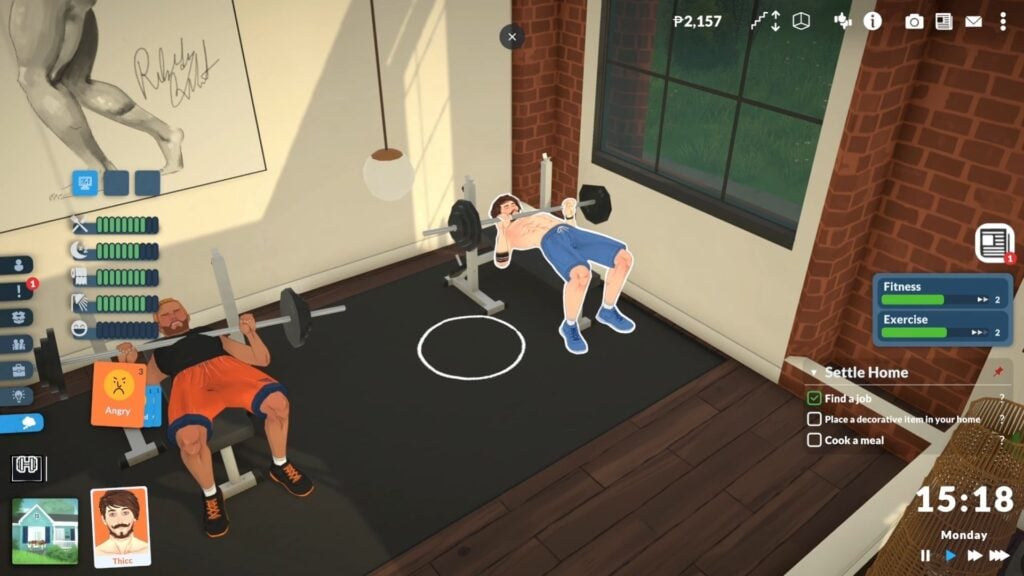
The Paramaker in Paralives is more powerful than what The Sims 4 has built across twelve years. But once you step out of the character creator, does the dream still hold up? Our verdict after several hours in Early Access, priced at $39.99 on Steam.
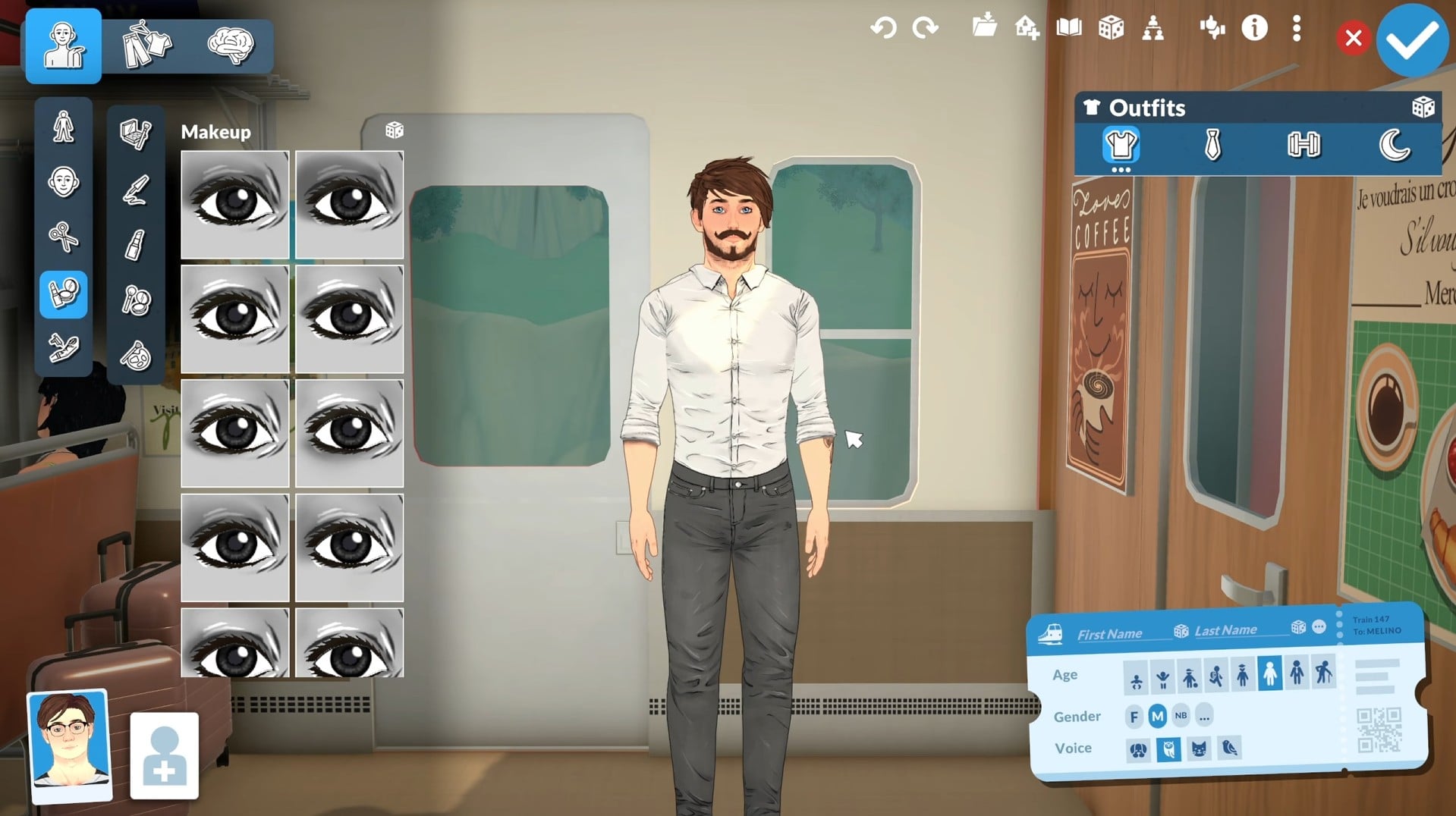
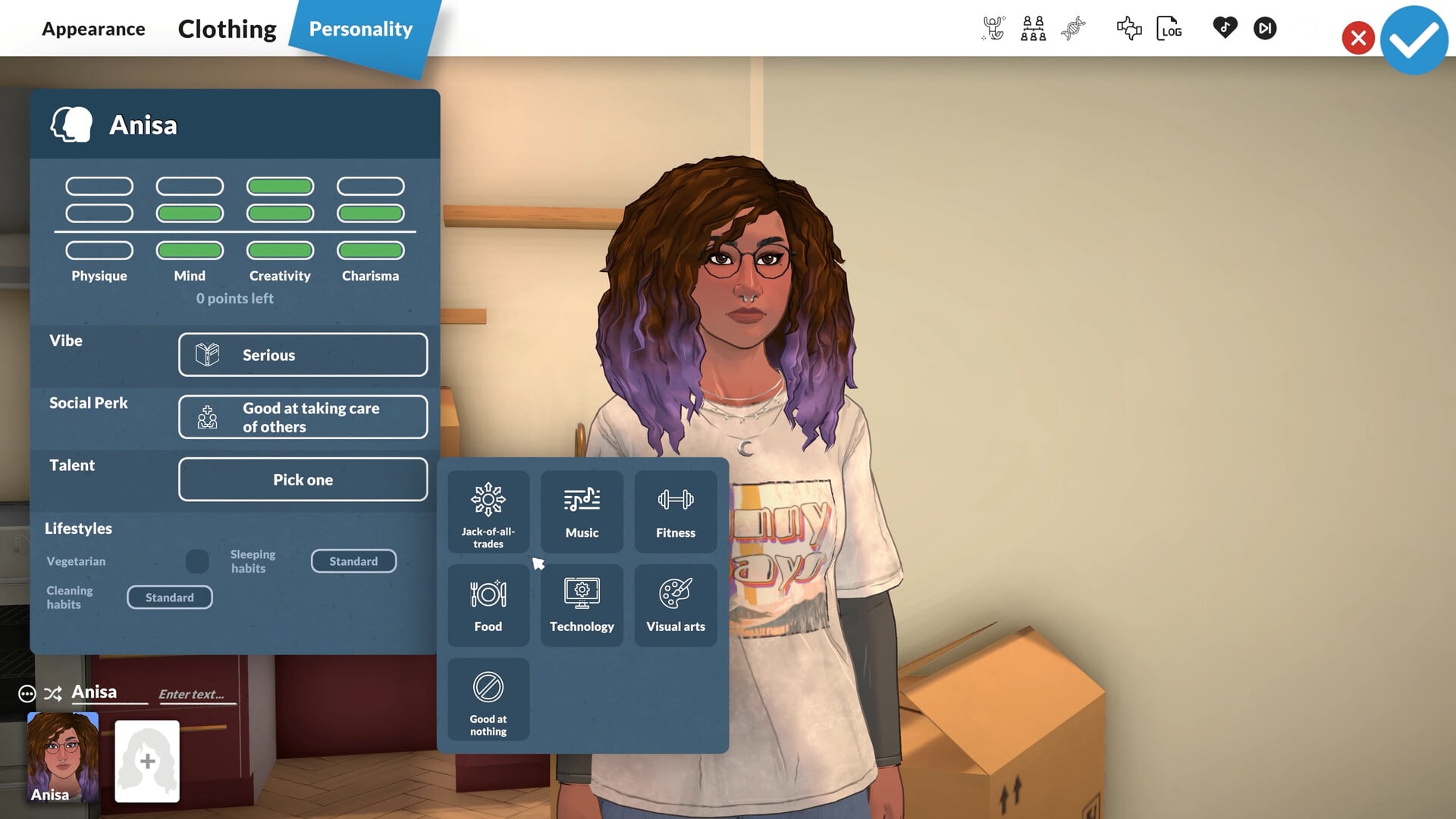
The Paramaker, Paralives‘ character creator, is without question its strongest argument right now. The Parafolks, the characters that populate the game’s world, all start from a single gender-neutral body that the player then sculpts freely, which opens the entire wardrobe to any Parafolk regardless of their chosen gender identity (F, M, or NB). The height slider runs on a 0 to 100 scale with both graphical slider and numeric input. Musculature, weight, chest, hips, buttocks, and every body proportion has its own dedicated slider, manipulable directly on a diagram or via copyable numeric values that transfer from one Parafolk to another.
The skin details break down into five sub-categories (moles, scars, freckles, acne, birthmarks) with free placement for some elements. 18 skin tone presets are available, complemented by a 4-zone color system (Base, Highlights, Shadows, Blush) each with a full color wheel and hex code support. 12 body presets serve as the foundation before custom adjustments, 18 facial hair presets combinable across three categories allow unique styles, and 10 body hair presets are adjustable zone by zone (torso, arms, legs). This density of options already places Paralives ahead of what EA delivers after more than a decade of development on The Sims 4.
The clothing system rests on a layered logic that is particularly well thought out. Each outfit is built piece by piece with vest, top, applied pattern, bottom, and shoes, every element comes with a color wheel with custom color saving, patterns themselves are customizable with independent primary and secondary colors, piercings can be selected one by one (with asymmetric options earring by earring), and tattoos stack in multiple layers freely placed on the body. Each Parafolk has 4 default outfits (everyday, formal, sport, sleep) extensible through sub-sets.
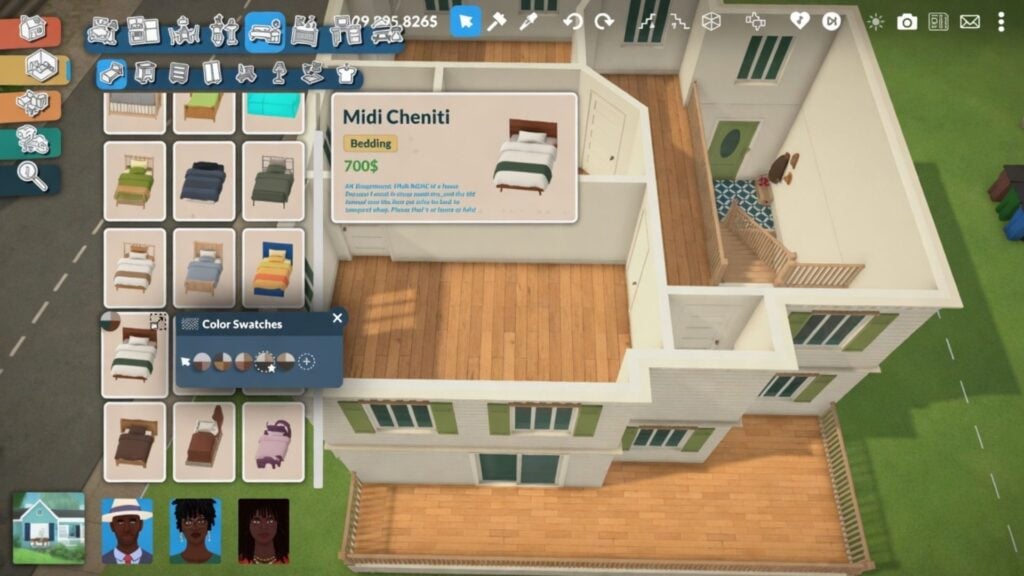
The Build Mode in Paralives is one of the most anticipated aspects of the game, and it delivers on part of its promise at launch. Three wall types are available (standard, half-wall, invisible), all supporting straight or curved construction natively, at any angle and any length. The grid is optional and toggleable on demand, thickness and height of walls are individually adjustable with handles directly in the viewport. The roof system offers 18 preset styles adjustable in height, width, and color, even though the studio acknowledges in-game that this part is « currently incomplete ». The platforms act as foundations and allow split-level designs for sunken living rooms or raised kitchens. Every furniture piece has its own color wheel with corner-handle resizing, opening architectural possibilities unprecedented in the genre.
The downside is immediate. The library of objects, furniture, materials, wallpapers, and flooring is still limited at this stage. Interior decoration enthusiasts will quickly hit the boundaries of available content. The roadmap promises numerous free additions, including advanced roof tools, customizable stairs, pools, lakes, ponds, and basements. But as it stands, Build Mode is mostly a powerful engine waiting for its definitive content.
This is where Paralives takes its most violent stance against The Sims 4. The official Modding Toolkit is integrated directly into the game, accessible from the main menu, without requiring any third-party software. The studio embraces a radical philosophy by stating the game itself « is a mod » built with these same tools, ensuring modders have access to exactly the same toolkit as the Paradevs. Where the Sims 4 community has been juggling for ten years with Sims 4 Studio, Blender, and undocumented proprietary formats, Paralives delivers a complete chain ready to use on day one.
The mods break down into 3 main categories from Day 1. Feature mods modify existing mechanics (vibes, relationships, careers), asset mods add visual content (clothing, hairstyles, furniture, recipes), and script mods change the game’s deeper functioning. Only the latter are not allowed on Steam Workshop at launch, but can be shared through third-party platforms. The list of moddable categories available on Day 1 is impressive: Build Mode assets, Paramaker assets, Photo Mode, careers, genetics, rabbit holes, recipes, TV channels, relationship labels, Together Cards, vibes, wants, food, custom radio music.
The integrated Steam Workshop offers filters by Modpacks, Households, and Lots, with automatic update propagation for subscribed mods. Mods can also be hosted elsewhere (Patreon, Tumblr, personal blogs), respecting the community-driven creation ecosystem already built around The Sims. This community-centered approach is unmatched in the genre at launch, and largely compensates for the initial content gap. Assuming the community shows up, and every signal suggests it will.
The most interesting idea in Paralives‘ gameplay lies in its Storyteller system. The player chooses at the start of a save one of 3 narrators (Ricardo, Maxence, or Stella), each with their own style and difficulty. Every evening, once all Parafolks in the household are asleep, the narrator offers 3 Story Cards from which the player must pick one. These cards grant a bonus, unlock a new life goal, modify a relationship dynamic, or add a random event for the next day. Maxence adds constraints like automatically eating and using the bathroom at work. Stella offers a more accessible experience.
The system extends into social interactions through Together Cards, offered during conversations between Parafolks to evolve relationships via a Relationship Labels system (Acquaintance, Friend, Romantic Interest, Lover, Fiancé). Each card displays a success percentage affected by compatible or conflicting Vibes, creating real narrative tension. This system structures the game around emergent goals rather than a purely free simulation that runs out of steam after a few hours like in The Sims. It’s probably the best idea in the game on the gameplay side, and it works from the first hours. The question is whether Paralives Studio will manage to enrich the card library enough across upcoming updates.
Beneath the brilliant Paramaker and the interesting narrator system, Paralives‘ Live Mode reveals its main current weakness. Social interactions between Parafolks remain basic. Conversation options come down to telling a joke, complimenting, talking about the weather, flirting, or comforting. After a few hours of play, the sense of repetitiveness sets in naturally. The career system relies on Application Points for job applications and a non-linear Expertise System that lets you switch domains without restarting from the bottom. On paper this is elegant, in practice career development remains a rabbit hole where the Parafolk disappears during work hours.
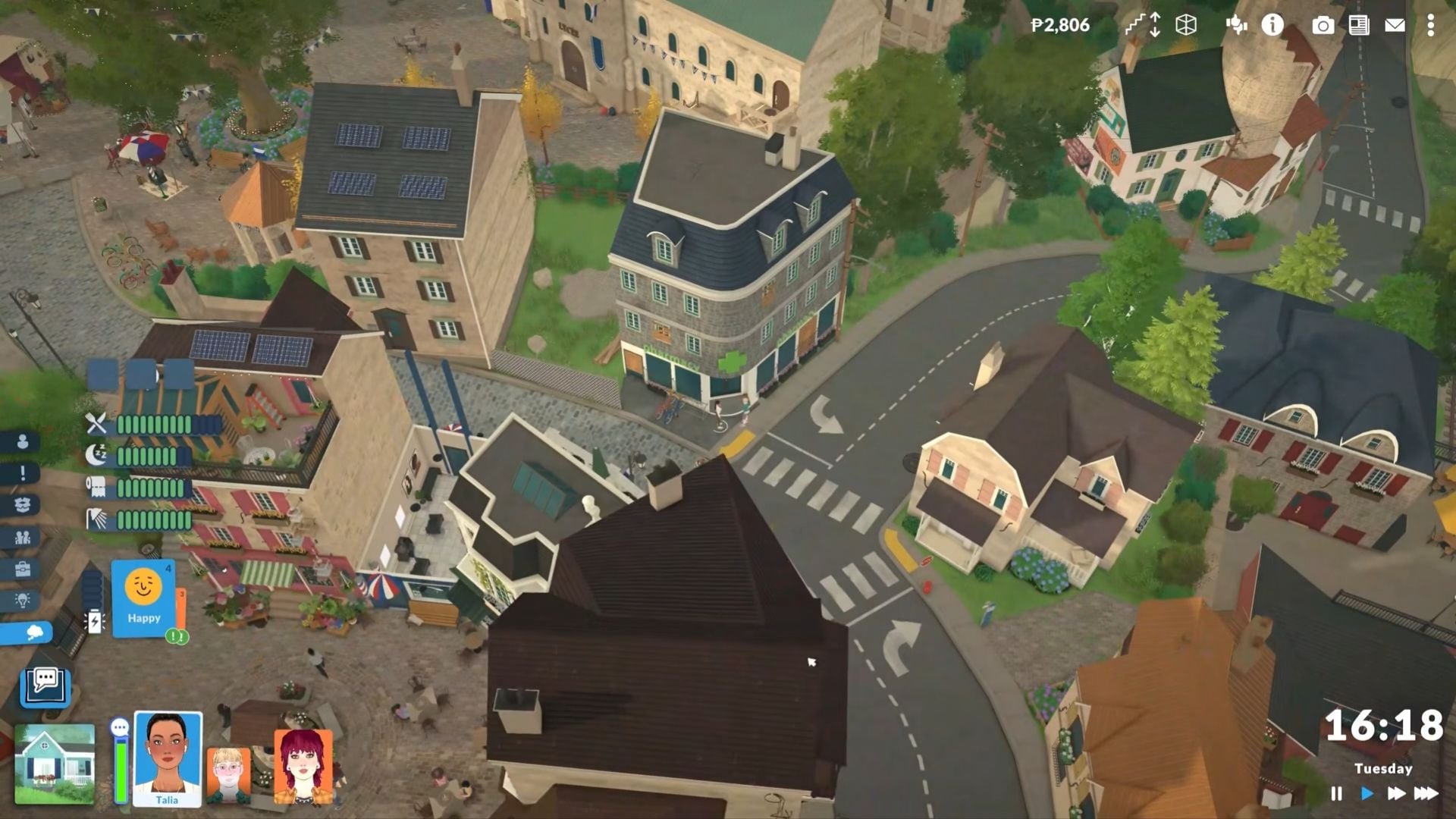
The open world in Paralives is pretty, animated, and free of loading screens between lots. The town is called Melino and is divided into 4 districts (Old Town, Industrial, Mountain, Countryside) with between 50 and 70 lots total mixing occupied homes, empty plots, and public buildings. The daily objectives offered by the town, like fixing a trash can or eating three times at Café Crème to write a food review, lack variety. Working life, career progression, and urban narrative triggers still need depth. The game currently gives the impression of an intelligent framework laid over content that doesn’t yet fill it completely. This weakness is fully owned by the studio, which is banking on two years of Early Access to close the gap.
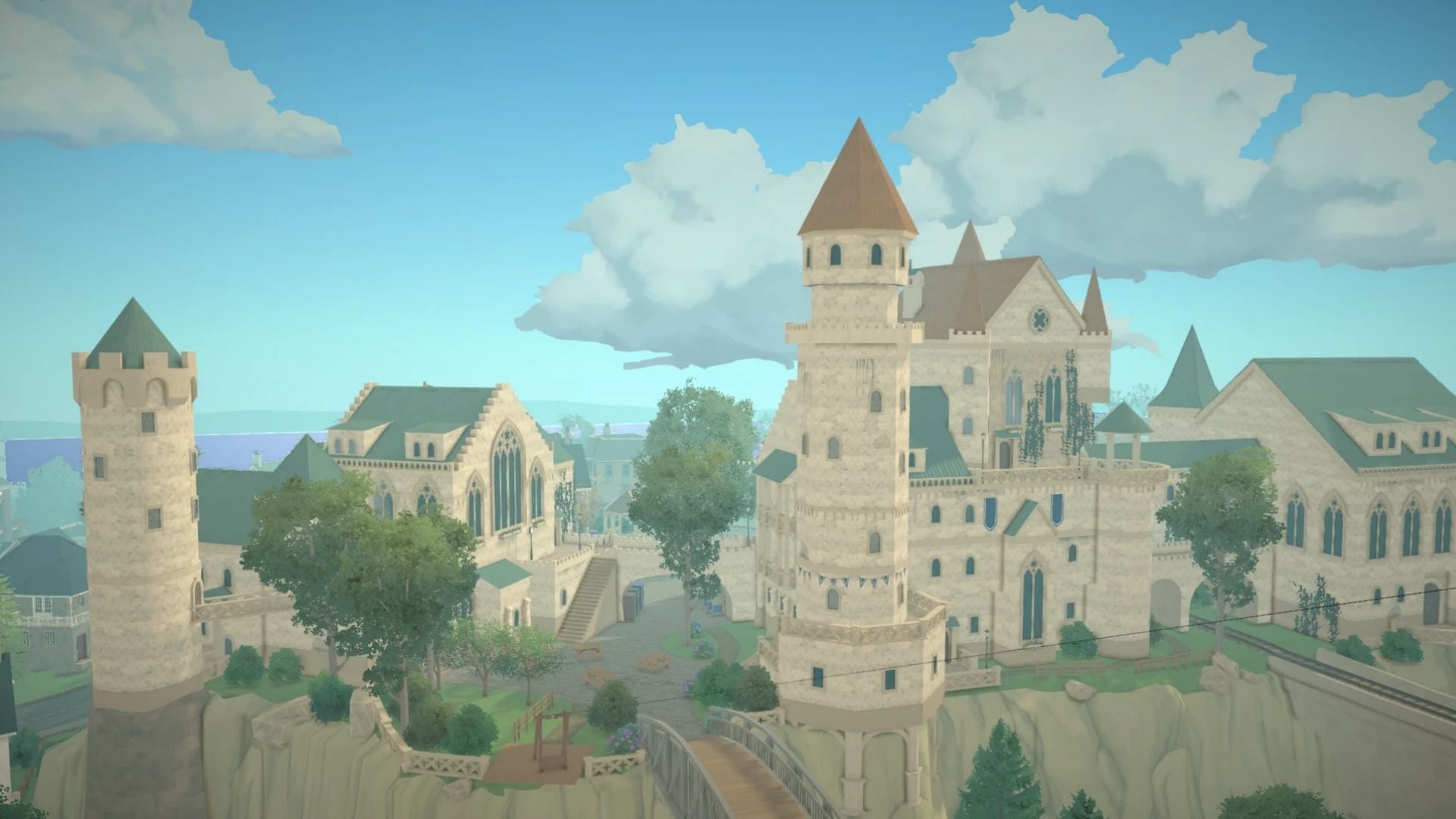
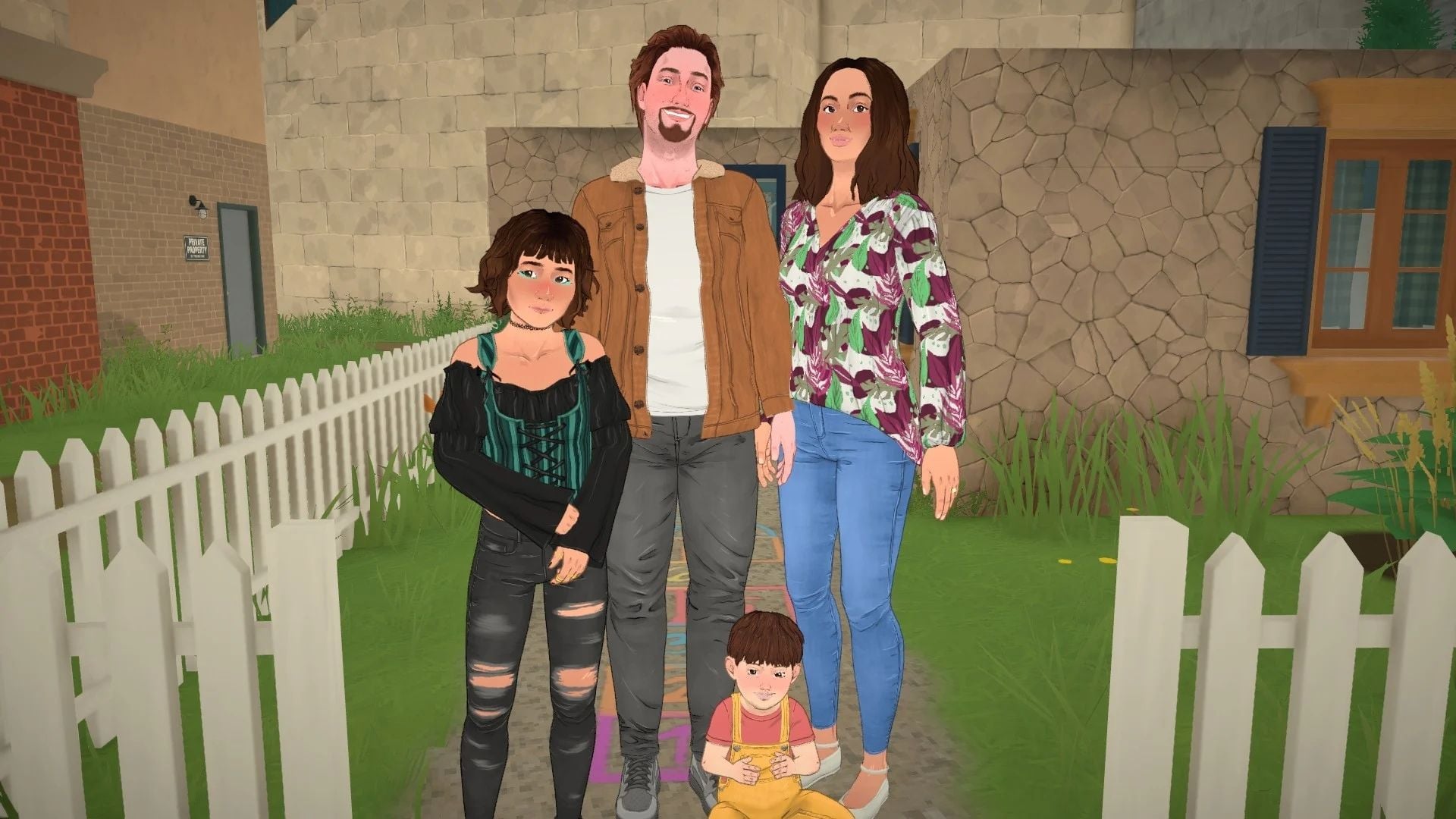
The visual style of Paralives embraces a cartoon-realistic approach that immediately sets it apart from competitors. The Parafolks‘ faces have realistic proportions while the comic book influence comes through in outlines, hair textures, and expressions. This synthesis works particularly well and gives the game its own visual identity, neither childishly cartoonish like The Sims 4 nor coldly hyper-realistic like inZOI. The warm color palette, the soft lighting of the open world, the picturesque architecture of Melino inspired by old European towns, and its varied districts from downtown to countryside create a successful and immediately endearing cozy atmosphere.
The Parafolks‘ animations are expressive, their movements fluid, and the Parli language unique to Paralives adds a touch of charm that recalls the best moments of the genre. Some visual bugs are worth noting at launch, with Parafolks occasionally frozen, misaligned objects, or sporadic AI issues. The studio has confirmed that June through September 2026 will be dedicated to optimization, bug fixes, and quality-of-life improvements rather than adding new systems. The first major content patch is expected for Q4 2026. Nothing dealbreaker for an Early Access that owns its identity, but these technical issues remind us that the game is still a work in progress despite seven years of preliminary development.

Scroll gaming news
Salut ! Moi c'est Barnabé, l'assistant gaming de RetroGems ! Pose-moi tes questions sur les jeux vidéo, les actus ou le contenu du site. Miaou ! 🎮
Tapez pour rechercher
Comments
Log in to comment
Continue with GoogleBe the first to comment on this article!